Can Rubber Expansion Joints Handle Extreme Temperature Conditions?
Quick answer: Yes — rubber expansion joints can operate reliably from -40 °C (-40 °F) to over 200 °C (392 °F), provided the elastomer and reinforcement are correctly matched to the medium, temperature range, and pressure. Below this threshold, selection errors are the #1 cause of premature aging, cracking, and leakage.
Extreme temperature service is one of the most common — and most misunderstood — application challenges for rubber expansion joints. Whether you’re specifying a high temperature rubber expansion joint for a thermal plant, or a low temperature expansion joint for a cryogenic line, the rules below will keep your selection defensible.
1. What “extreme temperature” really means for rubber
Rubber expansion joints are not one-size-fits-all. Each elastomer family has a defined continuous service temperature and a short-term peak temperature that must never be exceeded:
- EPDM: -40 °C to 130 °C — steam, hot water, weak acids
- Viton (fluororubber / FKM): -20 °C to 200 °C+ — fuels, oils, aggressive chemicals
- NBR (nitrile): -30 °C to 100 °C — oils and fuels
- Neoprene (CR): -25 °C to 105 °C — weathering, refrigerants
- Natural rubber: -40 °C to 80 °C — abrasion, water
The reinforcement matters just as much as the rubber. Aramid (Kevlar®) cord retains tensile strength across the full Viton range, which is why a Viton + Aramid construction is the de-facto choice when a rubber expansion joint in extreme temperature service is required.
2. Pressure derating — the rule most engineers miss
Standard rubber expansion joints are rated at 15–25 bar (225–362 psi) at ambient temperature. That number is not constant. Allowable working pressure drops as two variables rise:
- Temperature increases — elastomer modulus and bond strength degrade.
- Nominal diameter increases — larger bellows have more surface area under pressure.
A joint rated 25 bar at 20 °C may be derated to 15 bar or lower at 180 °C. Treat any catalog that lists a single pressure figure without a temperature curve as incomplete.
3. How to specify for extreme temperature service
Follow this checklist before ordering any industrial expansion joint for harsh thermal duty:
- ☐ Confirm the medium (chemical compatibility narrows the elastomer list first)
- ☐ Record the continuous operating temperature, not just the peak
- ☐ Note thermal cycling frequency — rapid swings age rubber faster than steady heat
- ☐ State the working pressure and design temperature together
- ☐ Specify the movement required: axial, lateral, angular
- ☐ Request the manufacturer’s temperature–pressure derating curve
4. Why generic catalog data is a liability
Never select from generalized temperature tables alone. A trustworthy manufacturer will publish, per model:
- Continuous temperature limit
- Peak (short-term) temperature limit
- Pressure rating at reference temperature
- Derating factor at service temperature
- Compatible media list
If these five fields are missing, the product is not specified for extreme temperature — it’s specified for a price sheet.
5. Develfluid extreme-temperature expansion joints
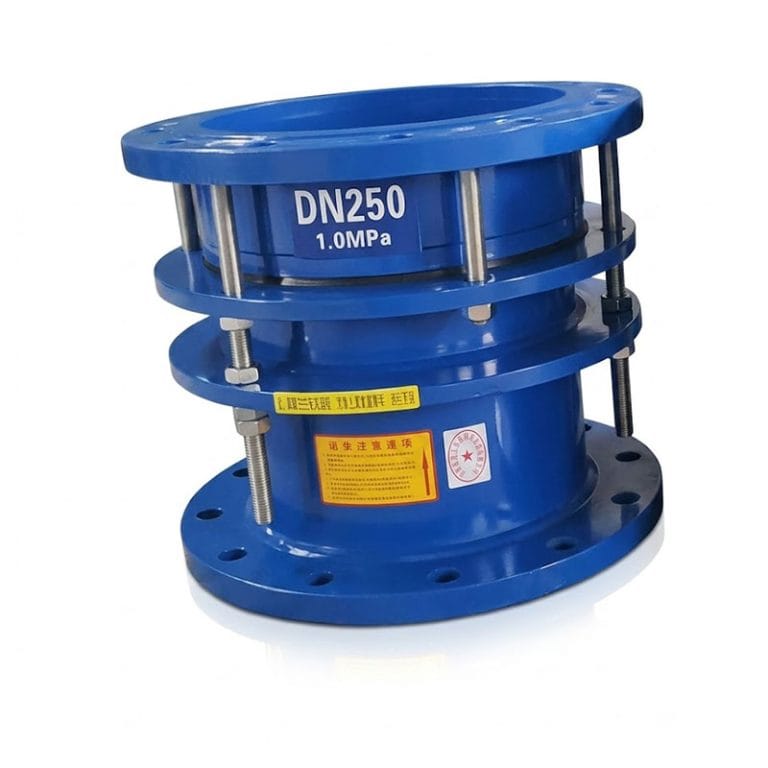
Develfluid supplies rubber expansion joints engineered for extreme temperature pipelines, with Viton + Aramid reinforcement constructions that hold stable service from -40 °C to 200 °C+. Each model ships with a full temperature–pressure derating chart and medium-compatibility datasheet, so you can specify — not guess.
- Browse the catalog: Develfluid Rubber Expansion Joints
- Engineering support: Request a selection for your operating conditions
FAQ — People Also Ask
Q1. Can a rubber expansion joint work in freezing temperatures below -40 °C?
Below -40 °C most standard elastomers approach their glass-transition temperature and stiffen. For deeper cryogenic service, consult Develfluid for specially compounded low-temperature builds; standard catalog joints should not be specified below -40 °C without a derating review.
Q2. What is the maximum temperature for a rubber expansion joint?
Around 200 °C (392 °F) continuous for Viton-based constructions with Aramid reinforcement. Short excursions to 230 °C may be tolerated; beyond that, a PTFE or metal expansion joint is the correct choice.
Q3. Does allowable pressure change with temperature?
Yes. Allowable working pressure decreases as temperature rises and as nominal diameter increases. Always confirm the derated pressure at your actual service temperature, not the ambient rating.
Q4. Which rubber is best for high-temperature oil service?
Viton (FKM) with Aramid reinforcement — it resists oils, fuels, and aggressive chemicals while holding mechanical integrity up to 200 °C+.
Q5. How do I prevent premature cracking of a rubber expansion joint?
Confirm the medium, stay within the continuous (not peak) temperature limit, account for thermal cycling, and never select from generic data alone. Use the manufacturer’s per-model derating curve.