The Flange Matters as Much as the Rubber
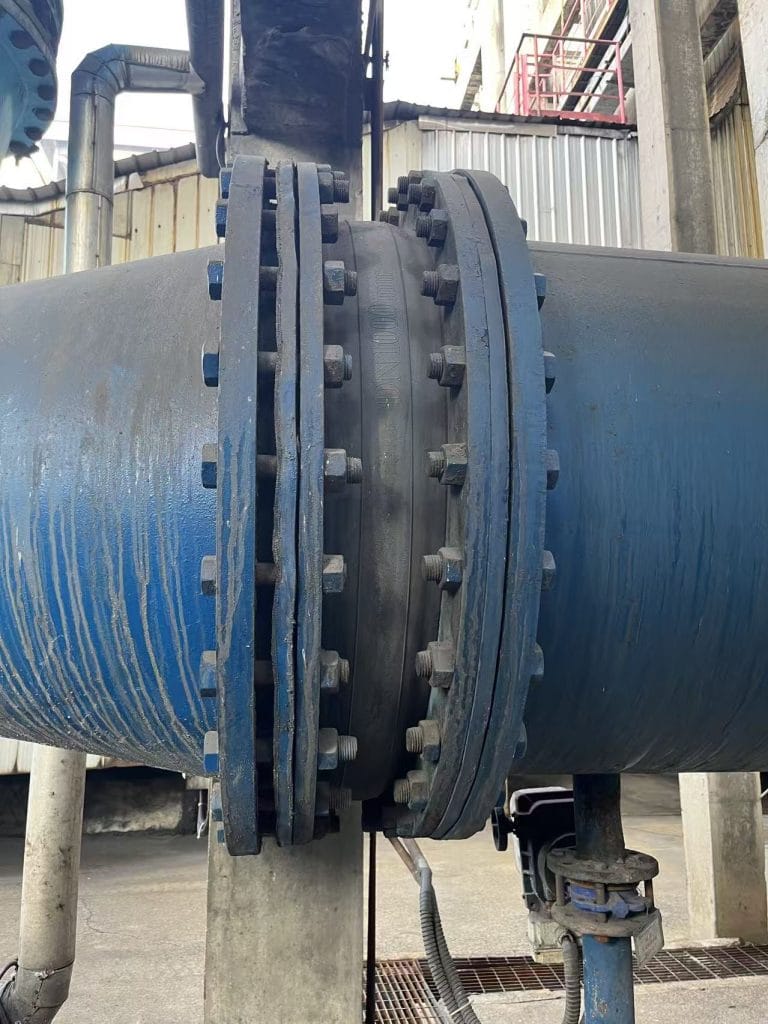
When engineers specify a rubber expansion joint, attention naturally goes to the elastomer body — EPDM, NBR, Neoprene — and rightly so. But there is an equally critical component that often goes overlooked: the steel flanges.
Flanges are the rigid connection points that bolt the flexible joint into your piping system. They are exposed to the same corrosive environment as the pipe itself — moisture, chemicals, salt spray, temperature swings. A poorly coated flange rusts, pits, and eventually compromises the seal integrity of the entire joint.
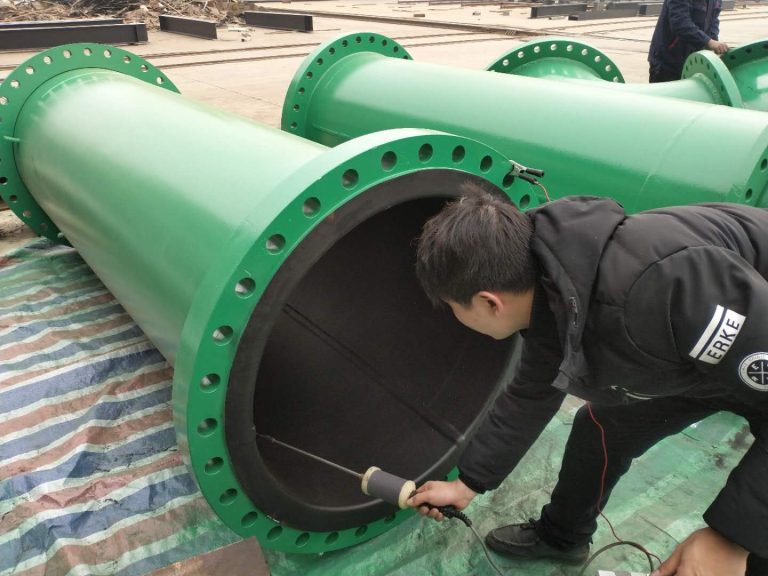
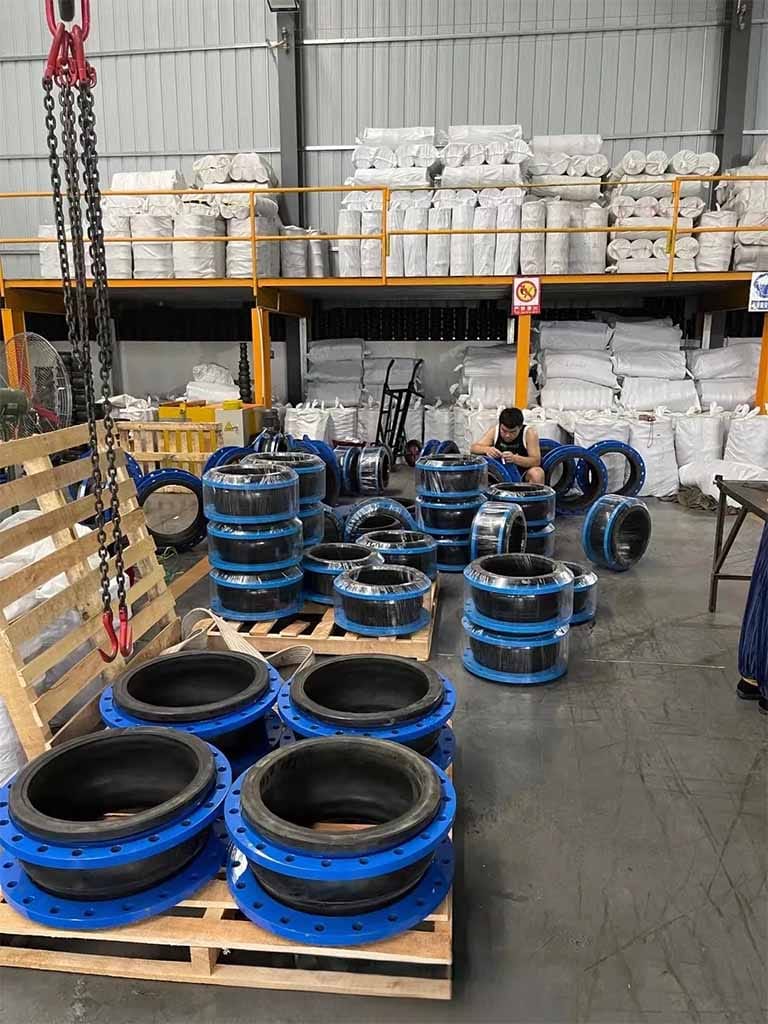
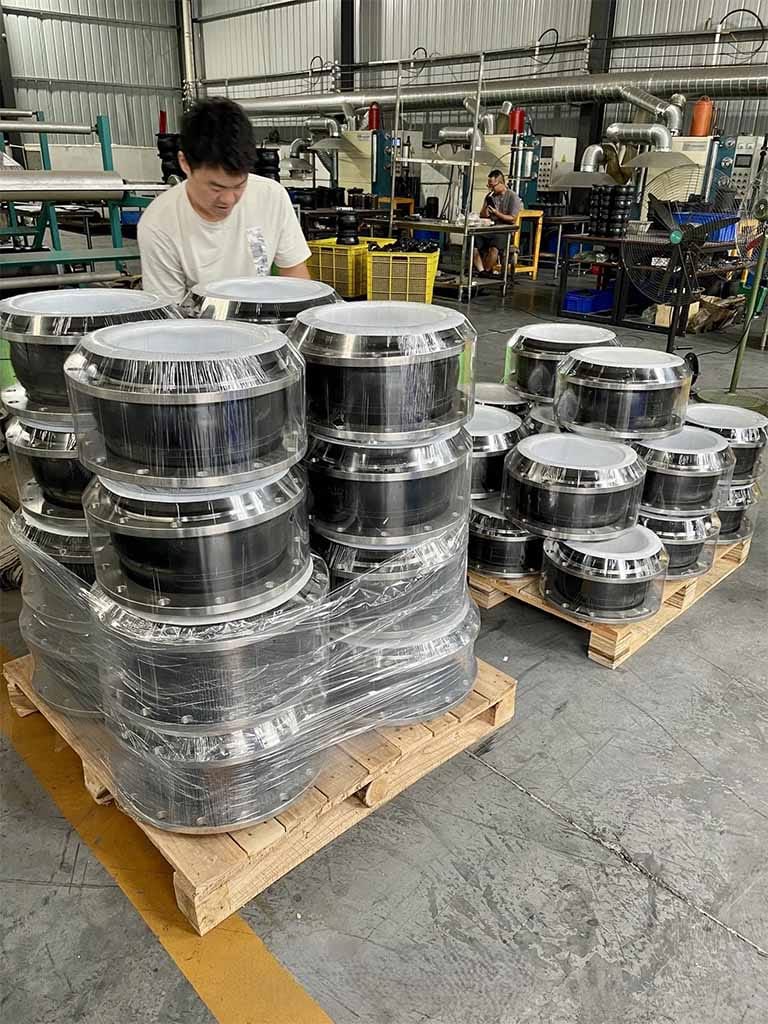
At Henan Devel Fluid Equipment Co., Ltd. (DEVEL), we take flange protection seriously. Every flange on every rubber expansion joint we ship — from DN32 to DN5000 — is finished with electrostatic powder coating, not conventional wet paint. Here’s why.
Powder Coating vs. Wet Paint: By the Numbers
* Compared to conventional wet-painted flanges under equivalent exposure conditions.
Full Comparison: Powder Coating vs. Wet Paint
| Parameter | 🟢 Powder Coating (DEVEL Standard) | 🔵 Wet Paint (Conventional) |
|---|---|---|
| Process | Electrostatic spray + oven cure (170–200°C) | Compressed-air atomization + solvent evaporation |
| Coating thickness | 60–150 μm — single application | 20–80 μm — multiple layers required |
| Corrosion resistance | Excellent — dense, sealed barrier | Moderate — depends on primer quality |
| Impact & abrasion resistance | High hardness — resists handling damage | Thin film — edges wear quickly |
| Adhesion (cross-hatch) | Electrostatic bond + thermal fusion | Good — dependent on surface prep |
| Edge & bolt-hole coverage | Uniform wrap-around coverage | Thins at sharp edges — prone to rust |
| Service life | 5–10 years | 2–5 years |
| Environmental impact | Near-zero VOC — powder recyclable | Solvent evaporation — VOC emissions |
| Surface appearance | Smooth matte/semi-gloss — premium finish | Glossier options; prone to runs & orange peel |
| Batch consistency | Automated — highly repeatable | Operator-dependent — variable |
| Repairability | Difficult to spot-repair after curing | Easy — sand and repaint locally |
| Equipment investment | Higher (spray booth + oven + recovery) | Lower (basic spray gun) |
| Long-term cost | Lower — powder recycled, fewer recoats | Higher — solvent consumption, more maintenance |
Why Powder Coating Wins for Industrial Flanges
✅ Advantages of Powder Coating
- Superior corrosion barrier: Dense, thick film (60-150 μm) effectively seals out moisture, oxygen, and chemical agents
- Excellent impact toughness: Cured coating resists chipping during flange handling, bolting, and transport
- Strong adhesion: Electrostatic attraction + thermal melt-bonding creates a bond far stronger than mechanical adhesion alone
- Complete edge coverage: Bolt holes, flange faces, and raised-face edges receive uniform coverage — no thin spots where rust begins
- Eco-friendly: Dry process — virtually zero VOC emissions, compliant with tightening environmental regulations worldwide
- Premium aesthetics: Smooth, even matte finish that looks professional and stays that way
- Single-coat efficiency: Full thickness achieved in one application — no primer, no multiple passes
- High material utilization: Overspray powder is recovered and reused — material efficiency exceeds 95%
- 5-10 year service life: Outlasts painted flanges by 2-3× under equivalent conditions
⚠️ Limitations (Honest Disclosure)
- Higher upfront equipment investment
- Oven size limits maximum flange diameter
- Not suitable for heat-sensitive substrates
- Post-cure spot repair is more involved
- High-gloss mirror finishes are harder to achieve
Industry Standards & Compliance
DEVEL’s powder coating process is governed by a comprehensive framework of Chinese national standards (GB) and international norms. This is not an ad-hoc finish — it is an engineered process with measurable, certifiable quality benchmarks.
Standards for Powder Coating (Electrostatic Spray)
- GB/T 18593-2010 — Anti-corrosive painting of fusion-bonded epoxy powder coatings on steel: Core standard governing materials, process specifications, and coating performance for steel corrosion protection.
- GB/T 21776-2008 — Standard guide for testing powder coatings and coatings: Establishes selection and application procedures for powder coating test methods.
- GB/T 5237.4-2017 — Wrought aluminium alloy building profiles — Part 4: Powder coating profiles: Technical requirements for thermosetting powder-coated profiles.
- GB 15607-2023 — Safety code for painting — Safety technical specification for powder electrostatic spraying process: Mandatory national safety standard.
Standards for Wet Paint (Liquid Coating)
- GB 14444-2025 — Safety technical requirements for spray booths: Mandatory safety standard for wet paint spraying facilities.
- GB/T 14441-2024 — Safety code for painting — Terminology: General terminology standard for the painting industry.
Universal Coating Performance Test Standards
- GB/T 1771-2007 — Determination of resistance to neutral salt spray: Core method for evaluating corrosion resistance of coatings.
- GB/T 9286-2021 — Cross-cut test: Authoritative standard for assessing coating adhesion (peel resistance).
- GB/T 1732-2020 — Determination of impact resistance of coating films: Falling-weight impact test for coating toughness.
- ISO 12944 Series — Corrosion protection of steel structures by protective paint systems: International benchmark for steel structure anti-corrosion coating systems (C1-C5/CX categories).
💡 Key Insight: Powder coating has a dedicated, system-level anti-corrosion standard (GB/T 18593) specifically written for fusion-bonded epoxy powder on steel — the exact process used on DEVEL flanges. Wet paint standards, by contrast, focus more on safety codes than coating performance specifications.
The DEVEL Commitment: Powder-Coated Flanges as Standard
At Henan Devel Fluid Equipment Co., Ltd., we do not treat flange coating as an afterthought. Powder coating is our factory standard — applied to every steel flange across our entire rubber expansion joint product line:
What This Means for Your Project
| Product Series | Flange Standard | Size Range | Flange Finish |
|---|---|---|---|
| Single Sphere Rubber Expansion Joint | ANSI B16.5 / DIN / BS / JIS / EN1092 | DN32 – DN5000 | ✅ Powder Coated |
| Double Sphere Rubber Expansion Joint | ANSI B16.5 / DIN / BS / JIS / EN1092 | DN32 – DN3000 | ✅ Powder Coated |
| Hand-Built Rubber Expansion Joint | ANSI / DIN / Custom | DN200 – DN4000 | ✅ Powder Coated |
| KWT 90° Rubber Elbow | ANSI / DIN / JIS | DN32 – DN300 | ✅ Powder Coated |
| PTFE-Lined Rubber Expansion Joint | ANSI / DIN / JIS | DN32 – DN600 | ✅ Powder Coated |
| Clamp Type Rubber Expansion Joint | SS304 / SS316 Clamp | DN25 – DN1000 | N/A (Stainless Steel) |
🔧 Performance You Can Rely On
- Coating thickness ≥ 60 μm on all flange surfaces
- Salt spray resistance ≥ 500 hours (GB/T 1771)
- Adhesion rating: Grade 0-1 (GB/T 9286 cross-cut)
- Impact resistance ≥ 50 cm (GB/T 1732)
- Coating hardness ≥ 2H (pencil hardness)
🎯 Value to Your Operation
- Better looking: Uniform matte finish — professional appearance that reflects quality engineering
- Longer lasting: 5-10 year coating life reduces unplanned shutdowns and replacement frequency
- Lower TCO: Reduced maintenance, fewer recoats, less downtime
- Greener: Zero VOC process supports your ESG and environmental compliance goals
- Fully traceable: Material certificates and test reports provided with every shipment
DEVEL — Powder-Coated Flanges. Standard. Not Optional.
Every rubber expansion joint we manufacture comes with powder-coated flanges as standard.
DN32–DN5000 | ANSI / DIN / JIS / EN1092 | EPDM / NBR / Neoprene / Butyl / PTFE-lined
📧 Contact our engineering team — replies within 24 hours
🌐 develfluid.com | Serving 30+ countries worldwide