
Fabric Expansion Joints Built to Your Duct Drawing
Factory-direct fabric compensators for power, cement, steel and process plants. –70°C to 1000°C standard skin material range, matched to your pressure and corrosion conditions, DN100–DN10000.
What Changes When You Quote With Us
| 24HAn Engineer Replies, Not Sales Your duct conditions go to the engineer who will design the joint — first response within 24 hours. | 3+Multi-Standard Compliance ASME, DIN and JIS designs from one factory — no re-engineering when your project spec changes region. | 48HFormal Quote, Fast Standard-spec quotes issued within 48 hours; non-standard and special-condition projects quoted on review. |
Is This Your Project?
Built for the Ducts Other Suppliers Won’t Touch
Fabric expansion joints are specified where metal joints corrode, crack or can’t absorb the movement. Devel engineers each joint to the actual duct drawing, not a fixed catalog size.FGD / SCR / ESP
Power plant flue gas systems with corrosive, high-temperature gas and continuous vibration from fans and boilers. Acidic ducts get a fluoro-rubber skin with a PTFE membrane — standard silicone rubber corrodes here.
Cement Plants
Preheater towers and kiln ducting where thermal growth and dust loading demand a bolt-on liner design.
Steel Mills
Clinker cooler and heat exchanger ducts running 650–850°F with heavy particulate and large expansion movement.
Boilers & Turbines
Gas recirculation and turbine exhaust systems needing vibration isolation and noise reduction at the joint.
Not on this list? Tell us your duct conditions — we quote non-standard applications too.
Choose Your Configuration
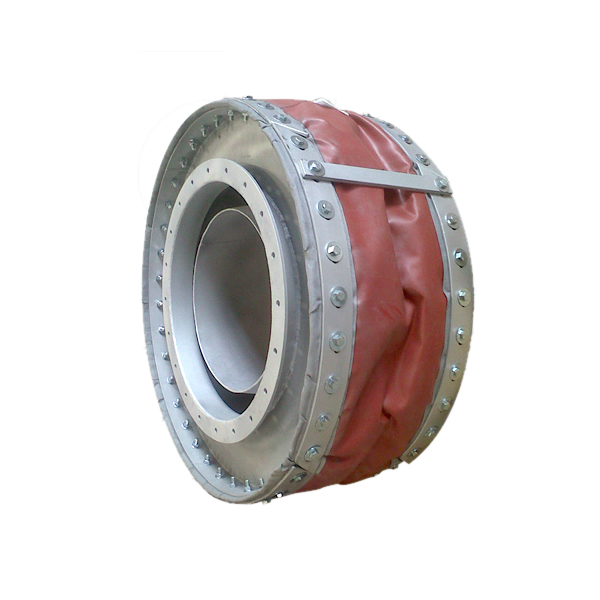
Round Fabric Expansion Joint (Circular Non-Metallic)
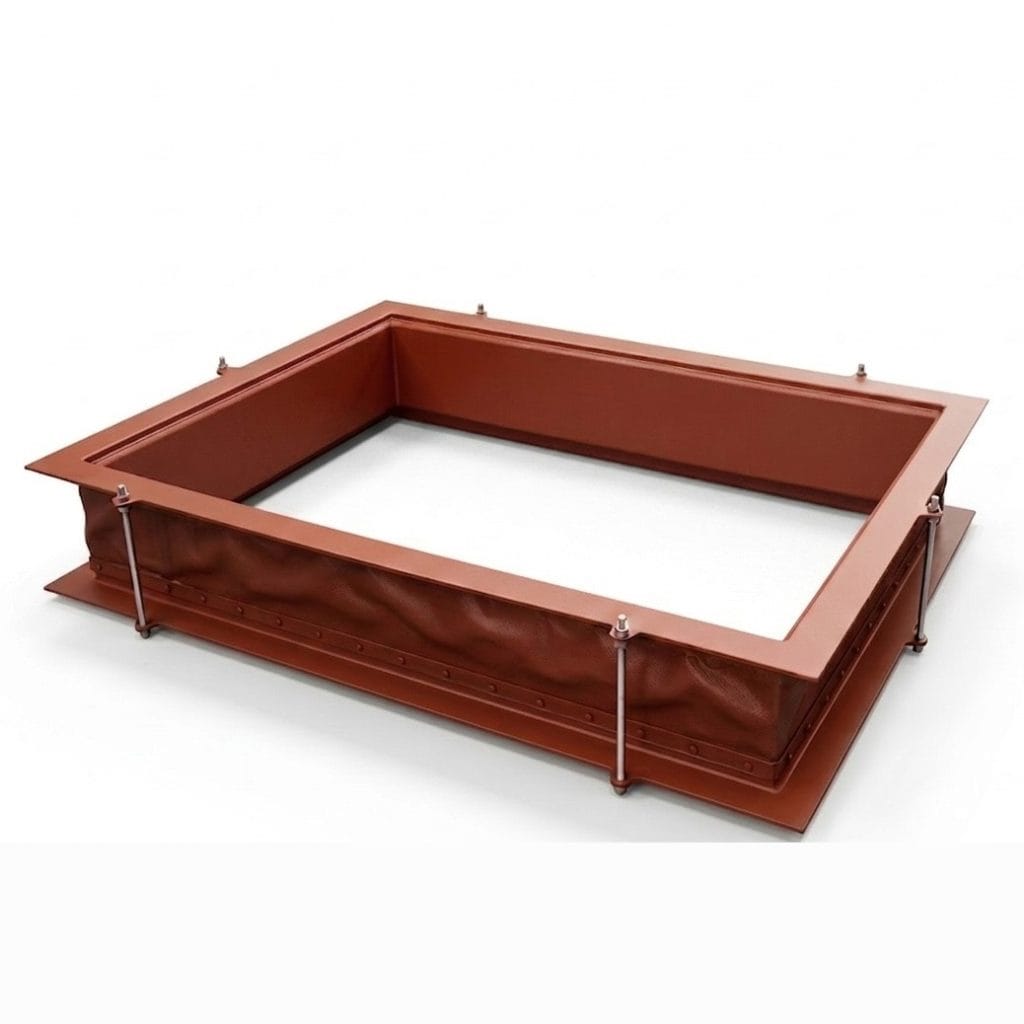
Industrial Rectangular Fabric Expansion Joint (Non-Metallic)

Fabric Belt for Non-Metallic Expansion Joints
Engineering Detail
Skin Material Is Selected to Your Operating Conditions
We don’t put the same skin on every job. Temperature, pressure and gas chemistry each push the material choice in a different direction — getting it wrong is the most common cause of early joint failure.By Temperature–70°C to 300°C — silicone-rubber fiberglass composite (economical, standard choice). | By PressurePositive-pressure or negative-pressure (vacuum) ducts get a steel wire mesh reinforcement layer to hold the skin’s strength and service life under load. | By CorrosionAcidic or alkaline gas (desulfurization, chemical plants) requires a fluoro-rubber skin with a PTFE membrane — standard silicone rubber is not acid-resistant and will fail. |
Structural Class
Frame & Insulation Grade by Design Temperature
Beyond the skin, the frame steel and insulation stack are also graded by class — this is what lets Class III joints handle structural temperatures up to 1200°C alongside a high-temp ceramic/zirconia skin.| Class | Design Temperature | Frame Steel Grade |
|---|---|---|
| Class I | T ≤ 350°C | Q235A |
| Class II | 350°C < T < 650°C | Q235 / 16Mn |
| Class III | 650°C < T < 1200°C | 16Mn |
Insulation cavity is filled with aluminum-silicate fiber wool; the heat-resistant lining uses a labyrinth (maze) layered structure to control leakage.
| Layer | Class I | Class II | Class III |
|---|---|---|---|
| 1 · Outer | Silicone-rubber fiberglass fabric | Silicone-rubber fiberglass fabric | Silicone-rubber fiberglass fabric |
| 2 | Wire-reinforced fiberglass cloth | Industrial canvas | Industrial canvas |
| 3 | Heat-resistant barrier cloth | Heat-resistant barrier cloth | Aluminum-silicate fiberglass cloth |
| 4 | Polyethylene film | Fiberglass felt | Heat-resistant barrier cloth |
| 5 | Heat-resistant felt | Heat-resistant barrier cloth | Zirconia fiberglass felt |
| 6 | Stainless steel wire mesh | Fiberglass wire cloth | Wire-reinforced fiberglass cloth |
| 7 · Inner | Stainless steel wire mesh | Stainless steel wire mesh | Stainless steel wire mesh |
Specifications
Standard Range
Custom sizes and non-standard conditions are engineered case by case — this is our stocked capability range.Nominal Size | DN100 – DN10000 |
Skin Temperature Range | –70°C to 1000°C |
Structural Class Range | Up to 1200°C (Class III frame) |
Shape | Rectangular, Circular, Belt-type |
Skin Material | Silicone rubber (std.) / Fluoro-rubber + PTFE (acid duty) |
Insulation | Aluminum-silicate fiber wool, labyrinth lining |
Frame Steel | Q235A / Q235 / 16Mn by class |
Standards | ASME, DIN, JIS — non-standard on request |
Typical Lead Time | Standard: 15–25 days · Custom: on quote |
Ready When You Are
Send Your Duct Conditions — An Engineer Reviews It, Not Sales
DN size, shape, temperature, pressure and movement — that’s enough for a first response. Drawings can follow once we’ve confirmed feasibility.
Common Questions
Send Your Duct Conditions — Get an Engineered Quote
DN100–DN10000 · –70°C to 1000°C · ASME / DIN / JIS · Factory Direct
Request Quote in 48h →