Devel Fluid Releases Technical Guidance on Expansion Joint Spacing in Industrial Pipelines — Clarifying Chinese National Standards for Global Engineers
As China’s industrial infrastructure exports continue to grow under the Belt and Road Initiative, more international engineering teams are encountering Chinese standards — yet clear English-language explanations remain scarce. Devel Fluid’s guide bridges this gap.
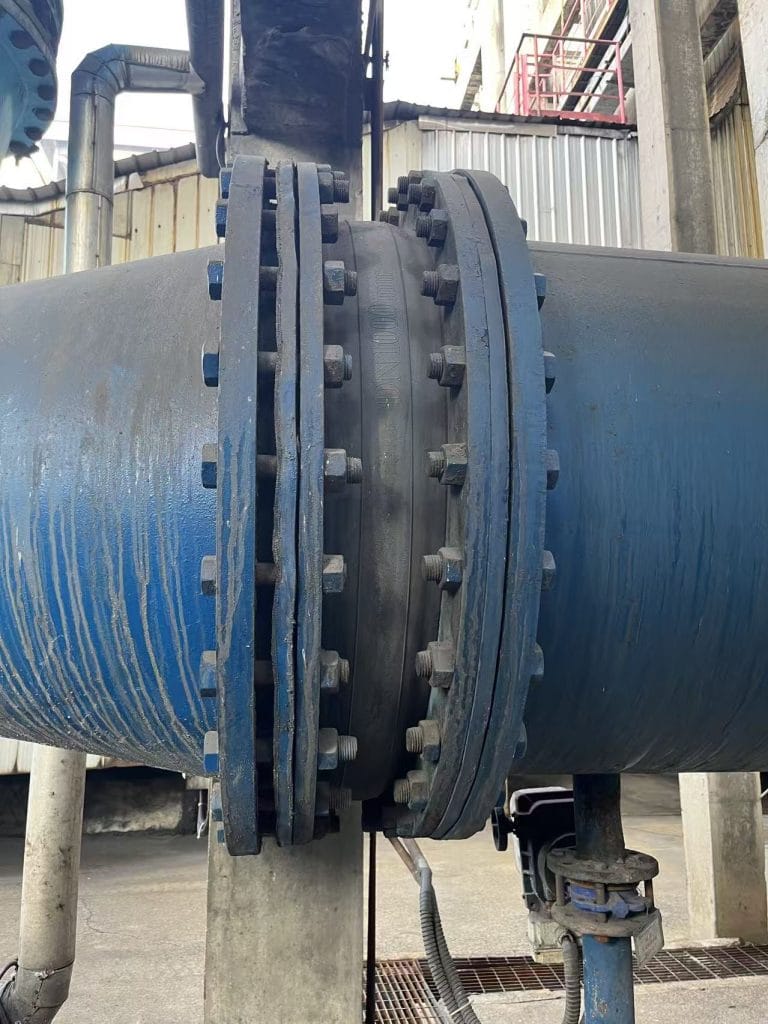
“We see the same question from our international clients again and again: ‘How far apart should we install expansion joints?’ The answer isn’t one number — it depends on material, temperature, pressure, and installation environment. Our guide walks engineers through the logic behind China’s GB/T standards so they can make informed decisions.” — Engineering Team, Devel Fluid
Key Question: How Far Apart Should Expansion Joints Be Placed?
Based on GB/T 12777-2019 — China’s national standard for metal bellows expansion joints (the Chinese equivalent to EJMA guidelines) — and supporting industry codes, Devel Fluid recommends the following reference spacing for carbon steel pipelines:
Pipeline Condition
Recommended Spacing
Applicable Chinese Standard
Above-ground, ΔT ≤ 100°C
30–50 m
GB/T 12777-2019, CJJ/T 81-2013
Above-ground, ΔT 100–150°C
20–30 m
HG/T 20645
High-pressure steam (≥0.6 MPa)
15–20 m
GB/T 20801.3
Direct-buried pipelines
80–100 m*
CJJ/T 81-2013
Stainless steel pipelines
+20% vs. carbon steel
(lower coefficient of thermal expansion)
*Subject to fixed pier thrust verification; soil friction may reduce effective spacing by 10–15% in buried applications.
A Note for International Readers: Understanding Chinese Standards
One of the most common sources of confusion for engineers outside China is the standard numbering system. Here is a quick primer:
Chinese Standard Prefix
Meaning
International Analogy
GB (Guobiao)
Mandatory national standard
Similar to ASME Code or EN mandatory standards
GB/T (Guobiao/Tuijian)
Recommended national standard
Similar to ISO, EJMA, or ASME B31.1 guidelines
CJJ/T
Recommended urban construction industry standard
Similar to AWWA or CEN/TC industry codes
HG/T
Recommended chemical industry standard
Similar to API or NACE industry standards
GB/T 12777-2019 is the primary Chinese technical specification governing the design, manufacturing, inspection, selection, installation, and operation of metal bellows expansion joints. In content and rigor, it is closely aligned with EJMA (Expansion Joint Manufacturers Association) standards — the global benchmark — while incorporating additional requirements specific to China’s operating conditions, such as district heating networks that rank among the world’s largest.
Practical takeaway for international projects: If your expansion joint supplier certifies compliance with GB/T 12777-2019, the product has been tested to a standard broadly equivalent to EJMA requirements. However, always verify that the specific material grades, pressure ratings, and fatigue life requirements match your project’s design code (ASME B31.1, B31.3, EN 13480, etc.).
Devel Fluid strongly recommends that all projects perform formal pipe stress analysis using CAESAR II, AutoPIPE, or ROHR2 — empirical spacing rules are useful for preliminary planning only and must be validated by calculation for safety-critical applications.
Devel Fluid’s Expansion Joint Portfolio
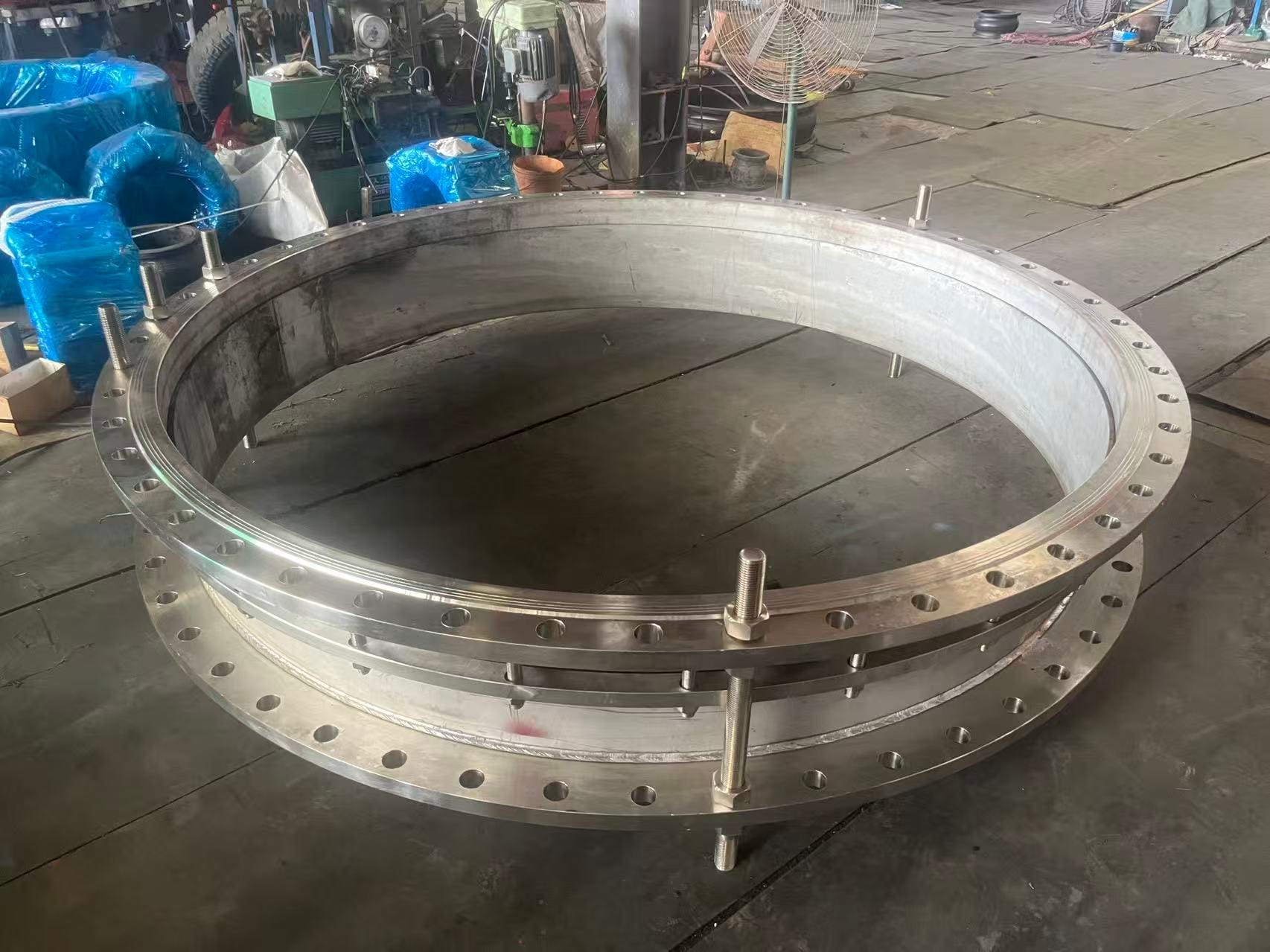
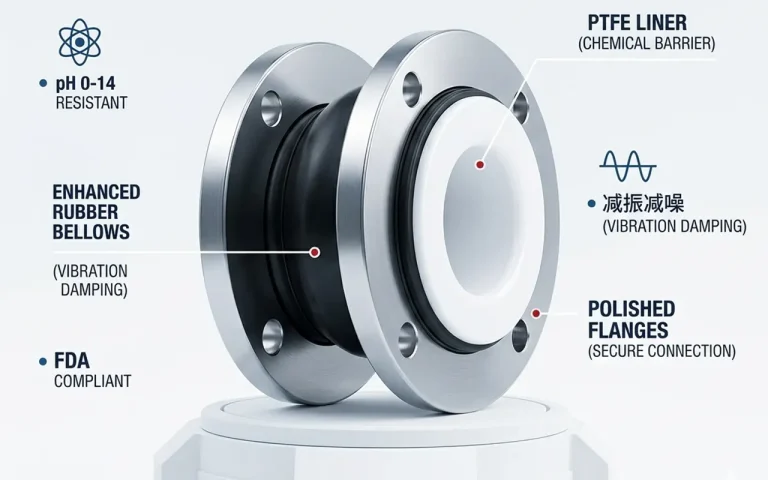
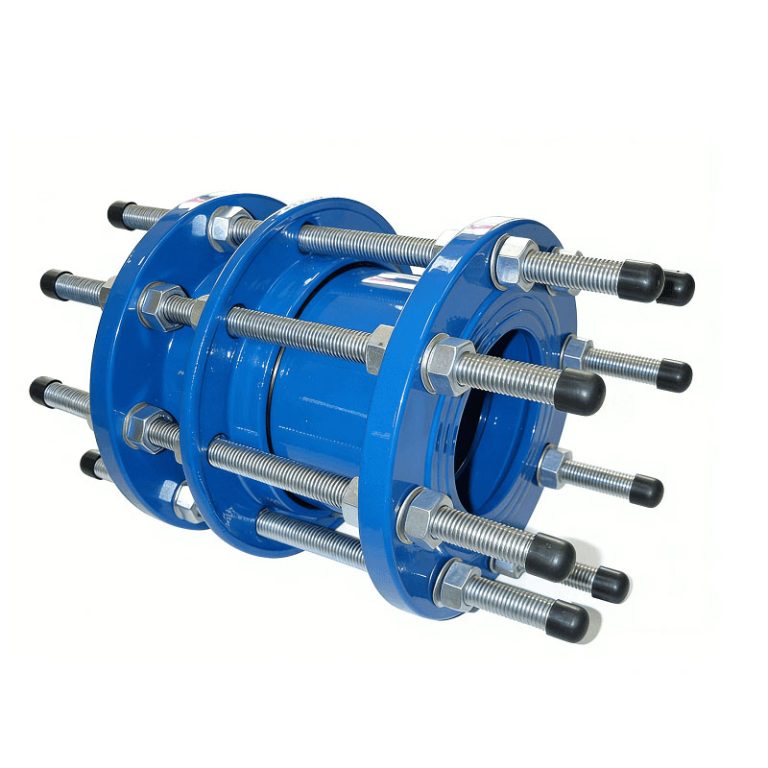
Devel Fluid manufactures a comprehensive range of expansion joints and fluid control products designed for global compatibility — fully compliant with ASME, DIN, JIS, BS, and GB standards.
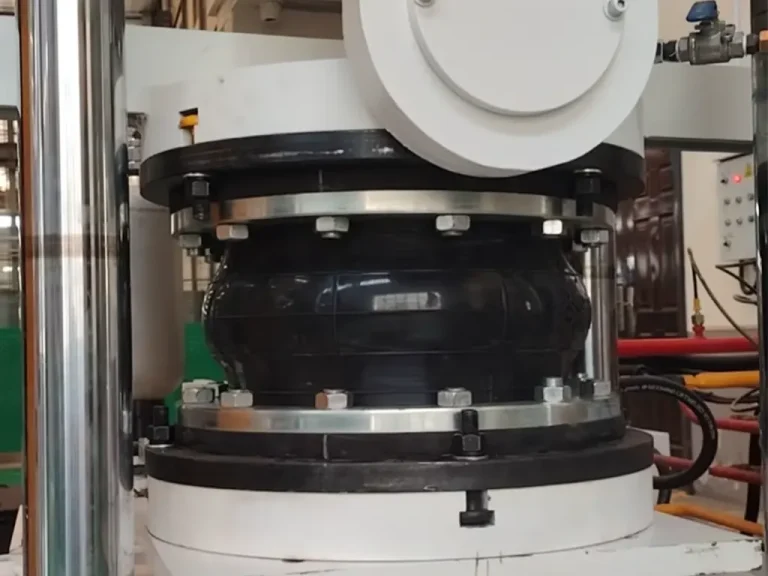
Configurations: Single sphere, twin sphere, wide arch, reducer type, threaded union
Key advantage: Hand-built construction enables rapid customization for non-standard flange drilling, special elastomer formulations, and unusual dimensional requirements
Replacement belt service available — no need to replace the entire joint assembly
5. Rubber Duckbill Check Valves
Flange-type and clamp-type configurations
Zero-maintenance backflow prevention for stormwater, wastewater, and cooling water outfalls
6. Rubber-Lined Piping & Fittings
Custom-lined straight pipe, elbows, tees, and reducers
Abrasion and chemical resistant linings for mining, chemical, and desalination applications
About Devel Fluid
Henan Devel Fluid Equipment Co., Ltd. is a specialized manufacturer of pipe expansion joints and fluid control solutions, headquartered in Zhengzhou, Henan Province, China — a major industrial and logistics hub in central China.
In the realm of high-end industrial fluid control, Develfluid is committed to solving connection stability challenges under the most extreme operating…