Polyester Cord Fabric: The Core Load-Bearing Component of Rubber Expansion Joints
Polyester cord fabric (also called polyester canvas) is the primary structural reinforcement inside rubber expansion joints, also known as rubber compensators or rubber flexible connectors. While the inner and outer rubber layers handle sealing, medium resistance, and vibration absorption, polyester cord fabric carries all internal pressure loads and mechanical stress in the piping system.
Embedded between the inner and outer rubber layers through multi-layer diagonal laying and high-temperature vulcanization, it forms an integrated rubber-fabric composite structure. This reinforcement solves the core weakness of rubber-only structures — bulging, deformation, and bursting under pipeline pressure — and is the decisive material behind a rubber expansion joint’s pressure resistance, dimensional stability, and service life.
Core Material Characteristics & Manufacturing Principle
Develfluid uses high-modulus low-shrinkage (HMLS) industrial polyester filament (PET) as the raw material for cord fabric, engineered specifically for industrial pipeline compensation conditions. Three processing details set it apart from ordinary textile fabric:
Special Cord Weaving Structure
Dense warp cords bear all tensile force, while sparse weft threads only fix the warp arrangement. This curtain-like structure maximizes load-bearing efficiency while reducing redundant material.
Professional RFL Dipping Treatment
All polyester cord fabric is treated with RFL adhesive dipping before use. This achieves tight molecular bonding with rubber during vulcanization, eliminating layer separation, delamination, and internal bubbling caused by poor adhesion.
±45° Cross Laying Process
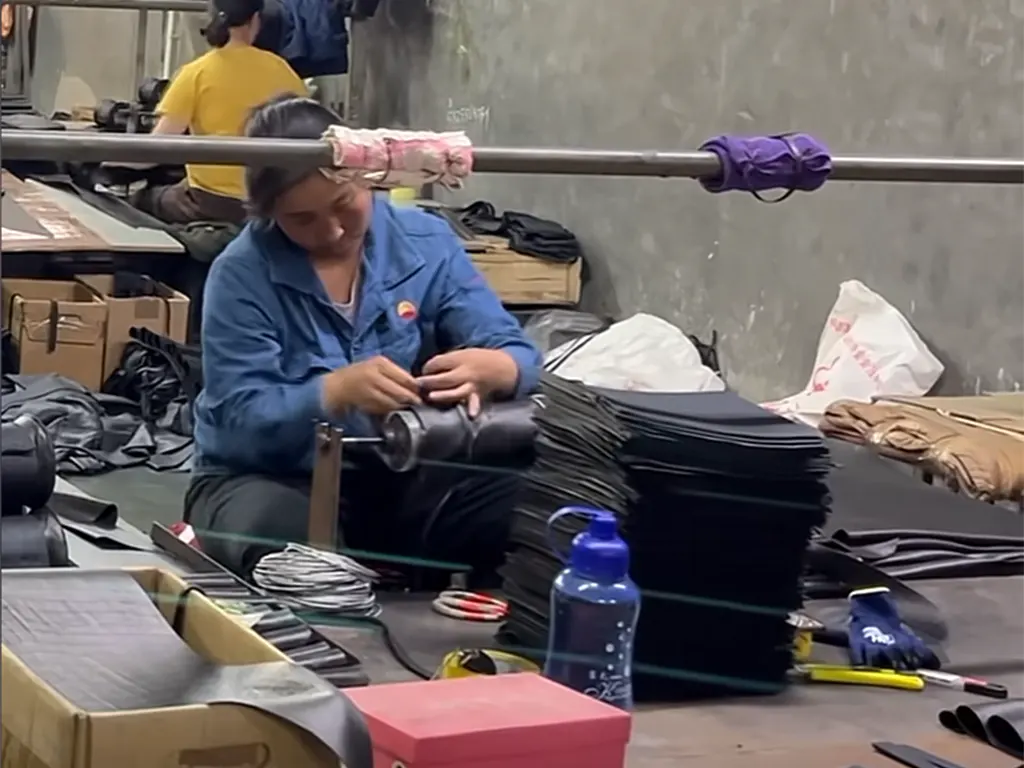
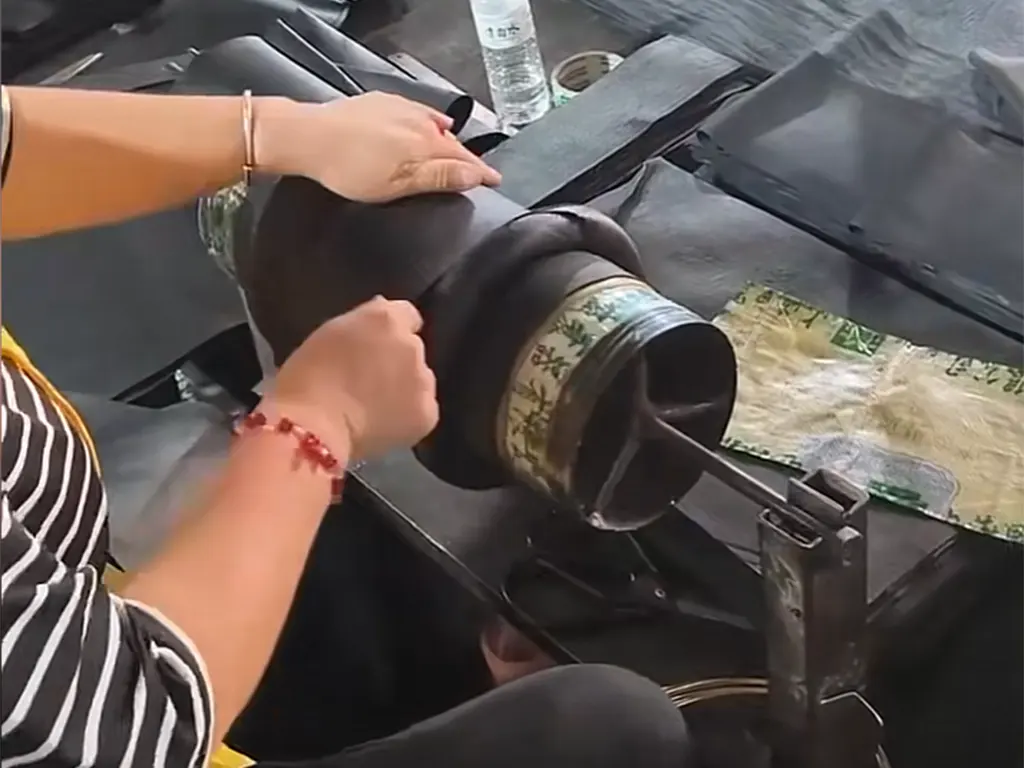
Cord fabric is cut and laid in 45° diagonal cross layers. This symmetric layup lets the expansion joint resist axial tension, radial pressure, and angular shear force at the same time — balancing multi-directional displacement compensation with structural stability.
Key Functions in Rubber Expansion Joints
As the “reinforcing steel bar” of rubber expansion joints, polyester cord fabric delivers three core advantages for industrial piping systems:
1. Ultimate Pressure Resistance & Burst Prevention
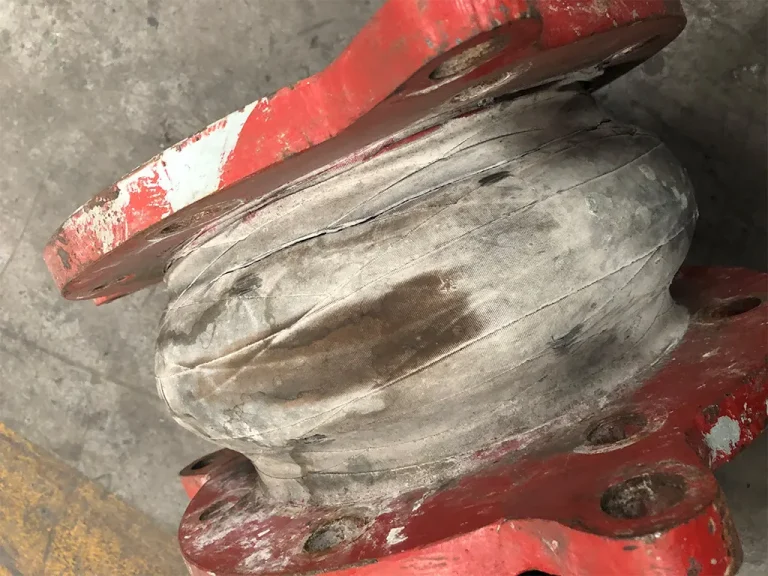
Pure rubber can only bear very low pressure. All working pressure (PN10 / PN16 / PN25) of an industrial rubber expansion joint is supported by its polyester cord fabric layers. Correctly matching fabric specification and layer count prevents sphere bulging, local deformation, and pressure bursting, keeping high-pressure pipeline systems stable.
2. Long-Term Dimensional Stability
Compared with nylon cord fabric, polyester cord fabric has higher modulus, lower creep, and lower thermal shrinkage. It resists permanent stretching under long-term pipeline pressure or temperature fluctuation, controlling the expansion/contraction range of the joint’s sphere and avoiding pipeline displacement failure caused by excessive deformation.
3. Fatigue Resistance for Vibration & Cyclic Conditions
Industrial pipelines face frequent vibration, thermal expansion and contraction, and repeated displacement. High-quality polyester cord fabric holds its tensile strength through tens of thousands of cyclic deformations, resists fatigue aging, and extends the service life of the rubber expansion joint — reducing maintenance and replacement costs.
Physical Parameters & Test Standards
Polyester cord fabric performance is defined by measurable physical parameters, not just material type. The table below lists the typical reference range for dipped HMLS polyester cord fabric used in rubber expansion joints, based on common industry specifications:
| Parameter | Typical Reference Range | Test Standard |
|---|---|---|
| Raw material | HMLS polyester filament (PET) | — |
| Common cord specifications | 1100dtex/2, 1440dtex/2, 1670dtex/2 | — |
| Breaking strength (per cord) | Approx. 60–115 N, depending on specification | ASTM D885 (D885M) |
| Elongation at break | Approx. 12–20% | ASTM D885 (D885M) |
| Thermal shrinkage (177℃ / 30 min) | ≤ 8% | ASTM D4974 |
| RFL adhesion to rubber (H-adhesion) | No delamination after vulcanization bonding | ASTM D885 (D885M) / ASTM D4776 |
| Continuous working temperature | -30℃ to 120℃ (130℃ short-term) | — |
| Moisture regain | Approx. 0.4% | ASTM D885 (D885M) |
These figures are typical industry reference ranges for dipped polyester cord fabric and vary by supplier, layer count, and pipeline pressure grade — always confirm against the specific mill test report or QC datasheet for a given order. Mechanical properties (breaking strength, elongation, adhesion) are measured per ASTM D885 / D885M — Standard Test Methods for Tire Cords, Tire Cord Fabrics, and Industrial Filament Yarns Made from Man-Made Organic-Base Fibers — the recognized test method for industrial cord fabric worldwide; thermal shrinkage is measured per ASTM D4974. Finished rubber expansion joints built with this reinforcement are typically specified against project piping codes (e.g. ASME, EN, or national standards) for flange dimensions and pressure-temperature rating.
Polyester Cord Fabric vs. Nylon Cord Fabric: Working Condition Selection Guide
To help customers choose the right reinforcement, here is how the two mainstream fabrics compare:
| Performance Item | Polyester Cord Fabric (Standard) | Nylon Cord Fabric (Optional) |
|---|---|---|
| Modulus & Creep Resistance | High modulus, low creep, stable size | Low modulus, easy to stretch and deform |
| Thermal Shrinkage & Temperature Resistance | Long-term working ≤120℃, small thermal deformation | Large thermal shrinkage, suitable for ≤100℃ |
| Fatigue & Flex Resistance | Stable for conventional cyclic conditions | Excellent flex resistance, suitable for high-frequency vibration |
| Application Scenarios | Water supply, drainage, conventional chemical, HVAC, general pressure pipelines | Pump outlet, high vibration, large-displacement special conditions |
Develfluid Recommendation: 90% of conventional industrial pipeline projects use dipped polyester cord fabric as the standard reinforcement. It balances pressure resistance, stability, and cost — making it the most reliable mainstream solution.
Common Quality Risks & Develfluid’s Optimization Solutions
Most early failures of rubber expansion joints — delamination, bubbling, bulging, bursting — trace back to unqualified cord fabric or irregular processing. Develfluid controls these risks from the source:
- No un-dipped grey fabric: Only full RFL-dipped polyester cord fabric is used, ensuring strong fabric-rubber bonding with no delamination over long-term operation.
- Standardized layer matching: Cord fabric specification (1100dtex/2, 1440dtex/2, 1670dtex/2) and layer count are matched to pipeline diameter and pressure grade, avoiding under-built joints.
- Strict anti-hydrolysis treatment: For hot-water and humid conditions, high-hydrolysis-resistant HMLS polyester cord fabric is used to slow material aging and strength loss.
- Precise 45° cross laying: Standardized laying angles avoid local stress concentration, keep force distribution even across the sphere, and preserve full displacement-compensation performance.
Application Industries
Rubber expansion joints reinforced with high-quality polyester cord fabric are used wherever vibration reduction, displacement compensation, and pressure sealing are needed:
- HVAC and building water supply & drainage systems
- Chemical, petroleum, and environmental/sewage pipelines
- Power plant, metallurgy, and industrial circulating water systems
- Pump station and compressor supporting pipeline equipment
- Municipal engineering and fire protection pipeline systems
Summary
Polyester cord fabric is the core load-bearing foundation of a rubber expansion joint, determining its pressure resistance, stability, and service life. Develfluid uses high-standard HMLS dipped polyester cord fabric and standardized cross-laying technology to eliminate the quality risks common in traditional products — delivering reliable rubber compensation solutions for industrial piping systems worldwide, with efficient vibration reduction and long-term stable operation.
Contact Develfluid to get fabric-layer specifications matched to your pipeline diameter and pressure grade.
Why is polyester cord fabric better than ordinary fabric for rubber expansion joints?
Polyester cord fabric has high modulus, low creep, and stable temperature resistance. After RFL dipping and vulcanization bonding, it adheres strongly to rubber, stably bearing pipeline pressure while avoiding deformation and delamination — far outperforming ordinary textile fabric.
How many layers of polyester cord fabric does my expansion joint need?
Layer count depends on pipeline diameter and pressure grade. Conventional PN10 specifications typically use 2–3 layers, while PN16 high-pressure specifications use 3–4 layers of high-strength polyester cord fabric to meet load requirements.
What is the maximum temperature resistance of polyester cord fabric expansion joints?
Optimized HMLS polyester cord fabric can work stably at 120℃ long-term and withstand short-term temperature spikes up to 130℃, suitable for most industrial hot-water and standard-medium pipeline conditions.