Dismantling Joints for Pipeline Systems: Technical Guide & Selection Tips | DEVEL
[Henan, China] — In any industrial pipeline system, valves, pumps, check valves, and flow meters eventually need to be removed — whether for inspection, repair, or replacement. Without a dismantling joint, this means cutting pipe, draining the line, and weeks of downtime. A properly specified dismantling joint eliminates that headache entirely. Henan Devel Fluid (DEVEL) provides this technical guide covering what dismantling joints are, their key advantages, available types, material options, and how to select the right one for your system.
───────────────────────────────────────
WHAT IS A DISMANTLING JOINT?
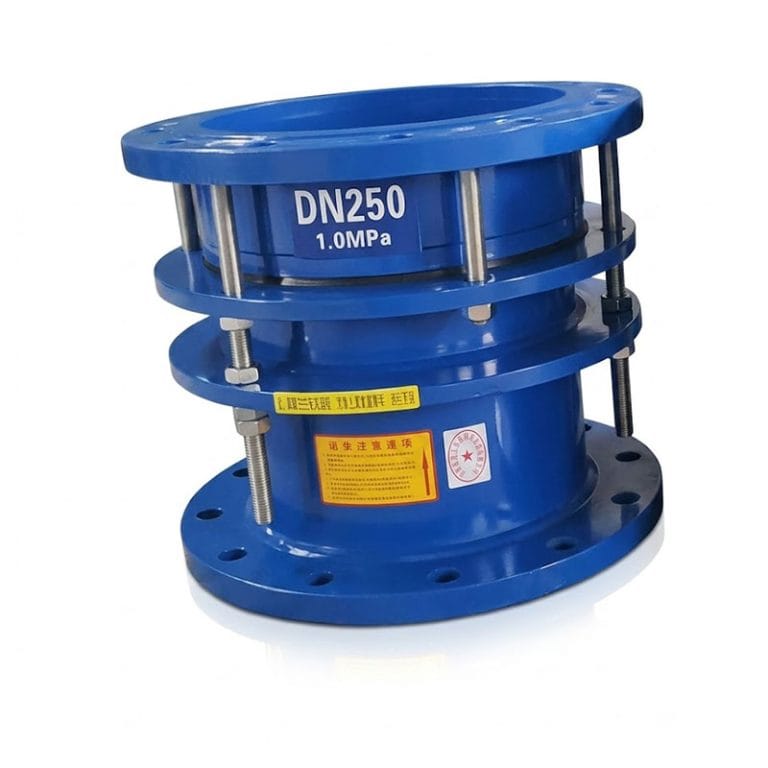
A dismantling joint is a mechanical pipe fitting installed between two flanged pipeline components. Its primary function is to provide adjustable axial clearance — a telescopic “give” — so that connected equipment (valves, pumps, flow meters) can be easily installed, removed, or replaced without cutting or modifying adjacent pipe sections.
A standard dismantling joint consists of three core components:
- Joint Body — connects the two pipeline sections and provides structural continuity
- Dismantling Flange Adaptor — ensures a secure, leak-tight flange connection with even gasket compression
- Tie Rods — absorb axial thrust forces generated by internal pressure, preventing the joint from separating under load
Together, these components form a rigid yet adjustable connection: stable during operation, flexible during maintenance.
───────────────────────────────────────
KEY TECHNICAL ADVANTAGES OF DISMANTLING JOINTS
- Axial Adjustment for Easy Installation
The most important advantage of a dismantling joint is its axial adjustment capability. Installers can compensate for small dimensional deviations between pipeline flanges and equipment flanges — no pipe cutting, no forced alignment, no field welding. This is particularly valuable in valve installation and replacement projects where precise face-to-face dimensions are critical.
- Reliable Sealing Under Operating Pressure
DEVEL’s dismantling flange adaptors are precision-machined to distribute gasket load evenly across the entire sealing surface. This minimizes the risk of localized leakage — even under high internal pressure. The joint can be loosened and reassembled multiple times without damaging the sealing surfaces, making it ideal for equipment that requires periodic maintenance access.
- Effective Control of Axial Thrust Forces
Tie rods are the unsung heroes of a dismantling joint. They restrain axial movement and absorb pressure-induced thrust forces that would otherwise transfer directly to valves, pumps, and connected equipment. By containing these forces within the joint assembly, tie rods protect downstream components from excessive mechanical loads and reduce the risk of flange failure.
- Reduced Maintenance Time and Operating Costs
With a dismantling joint in place, removing a valve or pump becomes a straightforward operation — loosen the tie rods, slide the joint back, lift the equipment out. No pipe cutting, no draining long sections of the line, no extended shutdowns. This translates directly to lower labor costs, shorter downtime windows, and improved system availability over the pipeline’s entire service life.
───────────────────────────────────────
TYPES OF DISMANTLING JOINTS
DEVEL offers multiple configurations to match different installation requirements:
Single Flange Dismantling Joint
- One flanged end, one plain end
- Suitable for simple pipeline connections where only one side requires adjustability
- Common in pump suction and discharge connections
Double Flange Dismantling Joint
- Flanged on both ends
- Provides greater axial adjustment range and installation flexibility
- Ideal for valve chambers and equipment that requires removal from both sides
Telescopic Dismantling Joint
- Extended axial travel range to accommodate thermal expansion and contraction
- Designed for long straight pipe runs subject to temperature fluctuations
- Commonly specified in district heating and outdoor exposed pipelines
Heavy-Duty Dismantling Joint (Type C2F)
- Reinforced design for high-pressure and large-diameter applications
- Robust tie rod assembly rated for extreme thrust loads
- DEVEL’s flagship dismantling joint for demanding industrial service
───────────────────────────────────────
MATERIAL OPTIONS
Dismantling joints can be manufactured from different materials depending on service conditions. DEVEL provides:
Carbon Steel (CS)
- High strength, suitable for general industrial applications
- Epoxy or fusion-bonded epoxy coating available for corrosion protection
Stainless Steel (SS304 / SS316 / SS316L)
- Excellent corrosion resistance for chemical, food-grade, and marine environments
- Ideal where media purity or hygiene is a concern
Ductile Iron (DI)
- Cost-effective, widely used in water supply and wastewater systems
- Good balance of strength and corrosion resistance with appropriate lining
Composite / Custom Alloys
- Lightweight or special-purpose applications
- Available on request for unique operating conditions
Material selection directly affects corrosion resistance, pressure capacity, and service life — DEVEL’s engineering team provides material compatibility guidance with every quotation.
───────────────────────────────────────
TYPICAL APPLICATIONS
DEVEL dismantling joints are deployed across industries where reliable sealing and frequent maintenance access are required:
- Water distribution and transmission pipelines
- Wastewater treatment plants and pumping stations
- Valve chambers and flow meter stations
- Power generation facilities (cooling water, service water)
- Oil, gas, and petrochemical processing lines
- HVAC and district cooling/heating networks
- Fire protection and sprinkler mains
───────────────────────────────────────
HOW TO SELECT THE RIGHT DISMANTLING JOINT
When specifying a dismantling joint, confirm the following parameters with your engineering team:
- Nominal Diameter (DN) — Match the joint size to your pipeline and equipment flanges
- Pressure Rating (PN) — Select a joint rated for your system’s maximum operating pressure
- Flange Standard — ASME B16.5, EN 1092 (DIN), JIS, or GB — must match existing flanges
- Face-to-Face Length — Confirm the required adjustment range (compressed and extended)
- Material — Based on media, environment, and corrosion requirements
- Tie Rod Quantity & Rating — Must be sufficient to absorb system thrust forces
───────────────────────────────────────
WHY CHOOSE DEVEL FOR DISMANTLING JOINTS?
Henan Devel Fluid Equipment Co., Ltd. is a factory-direct manufacturer with over a decade of experience supplying dismantling joints and pipeline accessories to projects across 30+ countries. Our joints are custom-configured to your exact specifications — not off-the-shelf compromises.
- Global standards: ASME, DIN, JIS, GB — your drawings, our manufacturing
- Full material range: carbon steel, stainless steel, ductile iron, and custom alloys
- In-house pressure testing and dimensional QC on every unit before shipment
- Fast turnaround: standard-spec quotations within 48 hours
- Competitive factory-direct pricing with no middleman markup
- Engineering support for non-standard and special-condition projects
───────────────────────────────────────
FREQUENTLY ASKED QUESTIONS
What is the difference between a dismantling joint and an expansion joint?
A dismantling joint is designed primarily for equipment installation and removal — it provides axial adjustment during maintenance but is rigid during operation. An expansion joint is designed to absorb ongoing thermal expansion, vibration, and pipe movement during system operation. Both serve different functions and are often used together in the same pipeline.
Can dismantling joints be used in vertical pipe runs?
Yes. DEVEL dismantling joints can be installed in vertical, horizontal, or inclined orientations. For vertical installations, the tie rod assembly must be rated to support the weight of the removable equipment section. Contact our engineering team for vertical application guidance.
What pressure ratings are available?
DEVEL manufactures dismantling joints rated from PN6 to PN40 (and higher on request), depending on diameter, material, and tie rod configuration.
Do you offer custom face-to-face lengths?
Yes. All DEVEL dismantling joints are built to order. If your installation requires a non-standard face-to-face dimension or extended adjustment range, simply provide the specification with your inquiry.
───────────────────────────────────────
GET A CUSTOMIZED DISMANTLING JOINT QUOTATION
Whether you need a single unit or a complete batch for a major project, DEVEL’s engineering team is ready to support you. Send us your operating parameters — DN, PN, flange standard, material preference, and required adjustment range — and we’ll return a customized quotation within 48 hours.
Email: info@develfluid.com
Website: https://develfluid.com/contact-us/
Phone: +86 18137171953
Henan Devel Fluid Equipment Co., Ltd. — Your Partner in Industrial Pipeline Solutions.