A Destructive Pressure Test: How the Quality of a Hand-Built Rubber Expansion Joint Is Forged
A Devel Fluid quality-control case study — Dissection analysis and process improvement
Before a rubber expansion joint ever ships to a customer, there’s a lot of work that happens behind the scenes — including pressurizing a sample until it fails, then fully dissecting it to examine the true condition of every layer: the rubber compound, the cord reinforcement, and every bonding surface. This article walks through one such real destructive test and dissection analysis — how we identified the problem, traced it back to root cause, and used it to drive a process upgrade.
Why We Test to Destruction
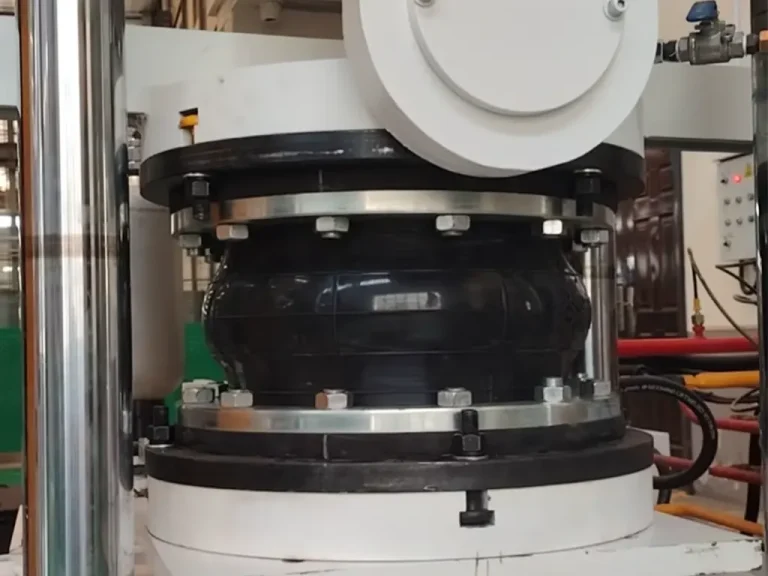
Rubber expansion joints operate under high pressure, constant vibration, and corrosive media. The flange connection and the sphere’s arc belt are where stress concentrates most. Routine factory hydrostatic tests (pass/fail only) can’t tell us where the real limit is or where the weak points are. So we periodically pull samples, pressurize them well beyond working pressure — sometimes to failure — and dissect them completely, laying every layer of material open for inspection. It’s the most direct way to uncover a latent defect.
Test Sample: DN1000-0.6, L=300, hand-built spherical rubber expansion joint, built with a B-5 butyl rubber compound system.
Test Process and Findings
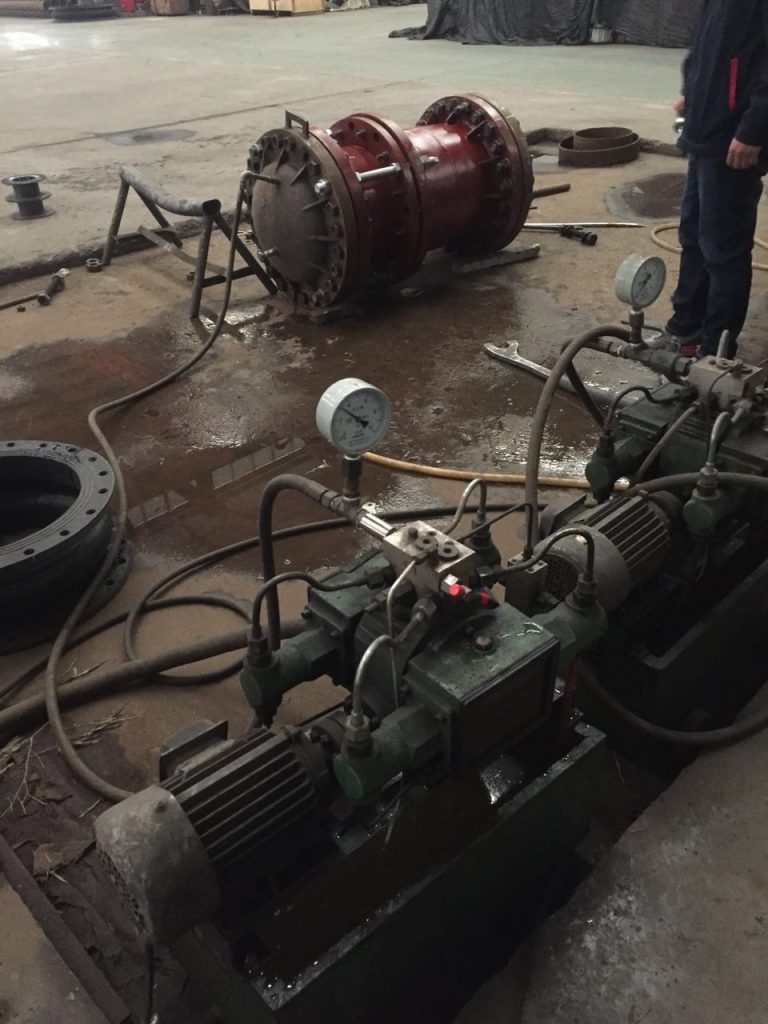
1. Hydrostatic Test: Failure at 9 kg
| Test Pressure | Hold Time | Result | Belly Diameter Expansion | Sphere Height |
|---|---|---|---|---|
| 3 kg | 10 min | No leak | 19 mm | 305 mm |
| 6 kg | 10 min | No leak | 20 mm | 308 mm |
| 9 kg | 30 s | Sphere ruptured | — | 310 mm |
Finding: Under normal conditions, belly diameter expansion should fall within 4–8mm. In this sample, expansion had already reached 20mm at just 6 kg — far beyond the normal range — indicating the rubber compound wasn’t adequately controlling deformation under pressure.
2. Dissection Analysis: Tracing the Root Cause Layer by Layer
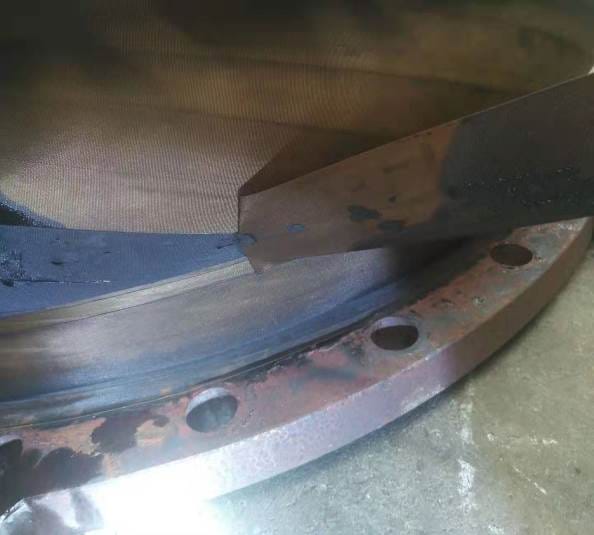
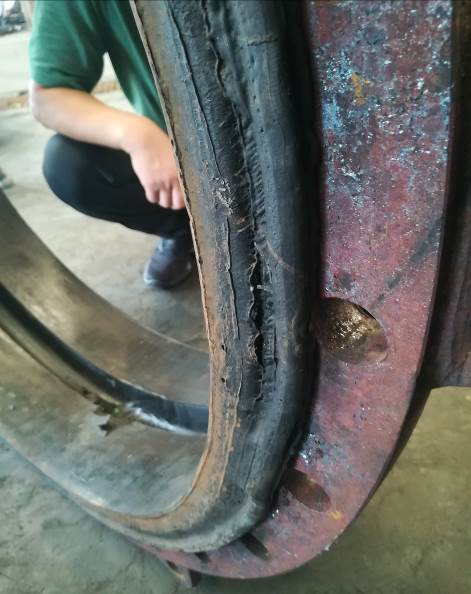
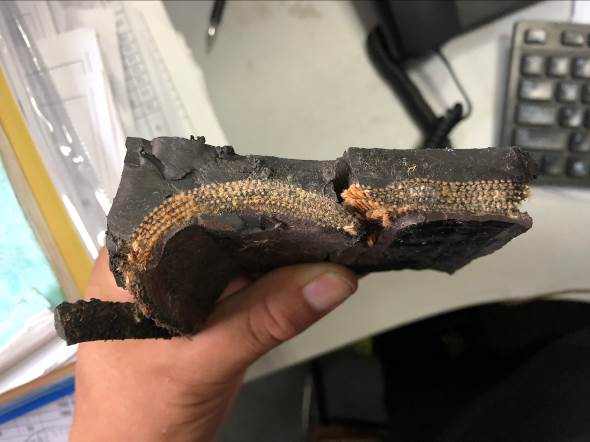
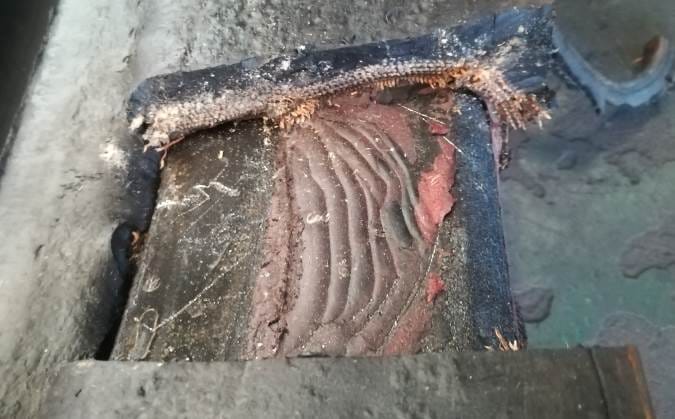
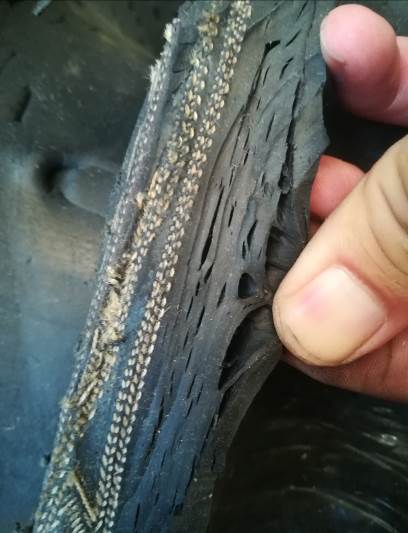
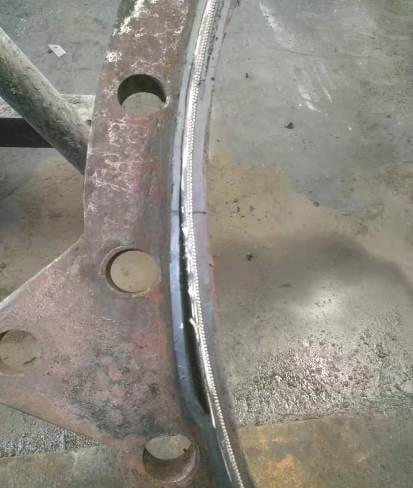
Based on the full dissection, we identified the following issues:
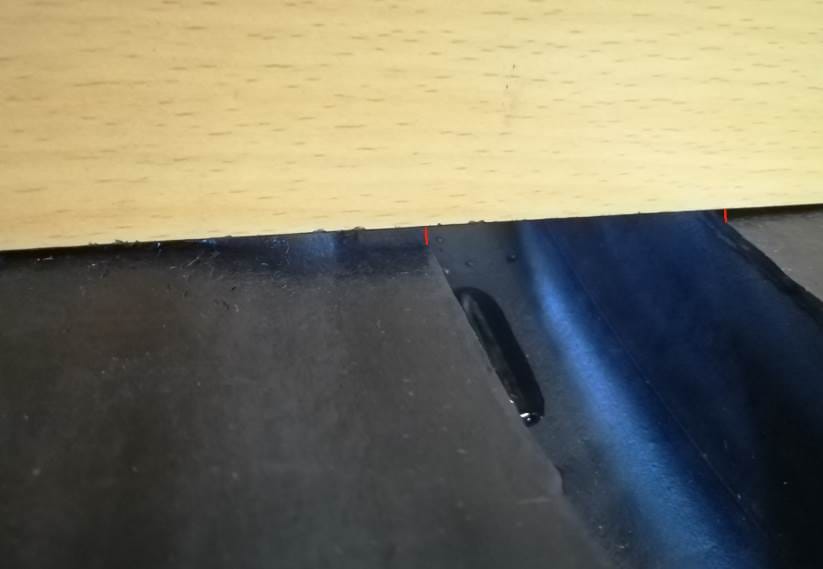
- Rubber hardness too low: measured at Shore A51–53 against a standard of A60±5, directly reducing the sphere’s ability to rebound under pressure
- Localized under-cure: the sealing face and arc belt failed to fully rebound after pressure loading — a classic sign of insufficient vulcanization
- Insufficient self-adhesion of the compound: under the B-5 butyl rubber system, poor bonding and trapped air were found between inner rubber layers and between rubber and cord; the outer rubber layer was also not fully bonded to the cord
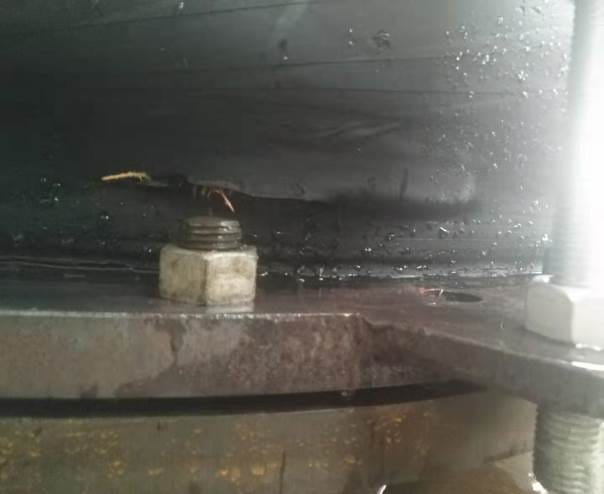
- A structural detail defect: the flange stub pipe end had not been ground to the required R-radius per the process spec; under excessive expansion, its sharp right-angle edge cut into the cord layer
- Insufficient cord strength: at the rupture point, the cord was frayed and could be pulled out and snapped by hand — indicating the cord never achieved effective composite strength with the rubber during forming
Root Cause Conclusions
- Rubber hardness was too low, with localized areas failing to rebound — indicating under-vulcanization
- The B-5 butyl rubber compound did not fully fuse with the cord layer, requiring a targeted adjustment to the vulcanization system
- The R-radius on the flange stub pipe end was not ground to spec — it should have been machined to an R3 fillet per the process document
- The cord reinforcement lacked sufficient strength after winding and vulcanization — it could be pulled out and snapped by hand, indicating this batch’s cord composite strength did not meet requirements
The Fix: What We Changed
Following this test, we implemented targeted process changes for every root cause identified. The product now uses an upgraded formulation and process, including (verify and fill in actual measures/parameters before publishing):
- Adjusted vulcanization process parameters to keep compound hardness reliably within the standard range
- Optimized the rubber formulation and vulcanization system to improve co-curing/self-adhesion strength between rubber layers and between rubber and cord
- Made R-radius grinding on the flange stub pipe end a standard, fully-inspected step, machined to an R3 fillet per spec
- Upgraded cord pre-treatment and winding process, and made destructive dissection testing a standing part of pre-shipment sampling
Final Thoughts
We’re sharing this test in full not because it’s a “perfect case” — it’s the opposite. It’s because a factory willing to pressurize its own product to failure and lay the problem bare for itself is a factory capable of continuously making that product more reliable. That’s our approach to every batch of rubber expansion joints we build: push it to the limit internally first, then put a reliable product in the customer’s hands.
About Devel Fluid
Henan Devel Fluid Equipment Co., Ltd. manufactures rubber expansion joints and fluid control products, serving industrial procurement customers across North America, the UAE, Saudi Arabia, and Qatar with tailored solutions. If you’re specifying rubber expansion joints for a project, get in touch for the full test report and technical data: develfluid.com/product/hand-built-rubber-expansion-joint