Flanged Expansion Joint Leakage: Root Causes, Repairs & Prevention | DEVEL
[Henan, China] — A leaking flanged expansion joint is more than a nuisance — it’s a safety risk, an environmental liability, and a drain on your maintenance budget. Whether the leak originates from the sealing surface, the joint body, or the pipe connection, the root cause almost always traces back to one of four common failure modes. In this practical guide, Henan Devel Fluid (DEVEL) breaks down each cause, provides step-by-step repair guidance, and shares preventive measures to stop leaks before they start.
─────────────────────────────────────────────────────────────────────
THE FOUR ROOT CAUSES OF FLANGED EXPANSION JOINT LEAKAGE
Leakage in flanged expansion joints typically falls into one of these categories: seal interface failure, excessive pipe displacement, body or weld defects, and installation errors. Identifying the correct cause is essential before attempting any repair.
─────────────────────────────────────────────────────────────────────
- SEAL INTERFACE LEAKAGE — THE MOST COMMON CAUSE
Why It Happens:
Seal interface leakage is the most frequently encountered problem. The sealing gasket between the joint flange and the mating pipe flange loses its ability to maintain a leak-tight barrier for three primary reasons:
- Inferior gasket material — the rubber sealing ring lacks adequate temperature or chemical resistance for the actual operating conditions
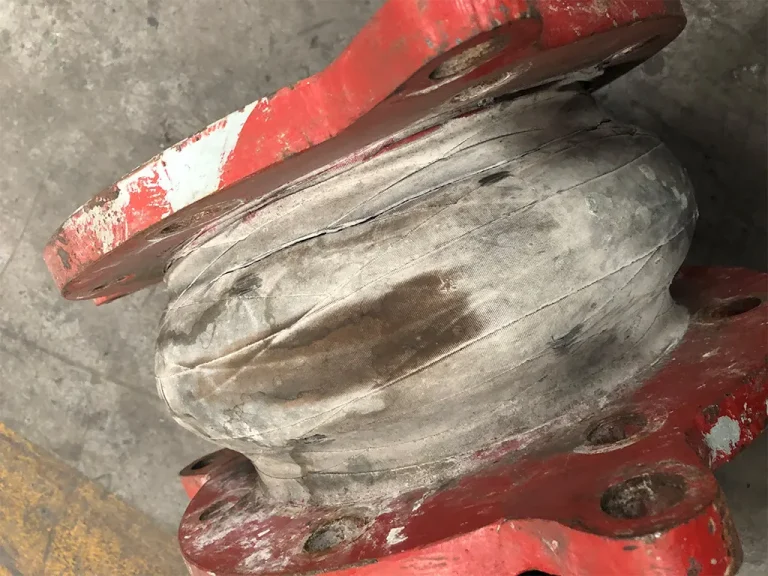
- Natural aging and degradation — rubber gaskets harden, crack, and lose elasticity over time, especially in high-temperature or outdoor service
- Loose fasteners — bolts and nuts on the gland or flange gradually loosen due to thermal cycling, vibration, or insufficient initial torque
How to Fix It:
Step 1 — Re-tighten bolts uniformly. Using a calibrated torque wrench, tighten in a star-pattern sequence to ensure even compression across the entire sealing surface. Do not overtighten; follow the manufacturer’s torque table.
Step 2 — Replace the gasket. If the sealing ring shows cracking, hardening, or permanent compression set, replace it immediately. DEVEL recommends EPDM (ethylene propylene diene monomer) gaskets rated to 150°C continuous for most water and process applications. For oil or chemical service, NBR or PTFE gaskets should be specified.
Step 3 — Inspect gasket seating. Confirm the gasket sits flat and centered, with no twisting, debris, or foreign material trapped between the sealing faces. Even a small piece of grit can create a leak path under pressure.
───────────────────────────────────────
- EXCESSIVE PIPE DISPLACEMENT — PULL-OUT LEAKAGE
Why It Happens:
Every expansion joint has a rated movement envelope — maximum axial compression, axial extension, lateral offset, and angular deflection. When actual pipe displacement exceeds the joint’s design capacity, the telescoping section or bellows element is pulled beyond its limit, causing separation and leakage.
Common scenarios include:
- Thermal expansion was underestimated during system design
- Pipe anchors have shifted, corroded, or failed entirely
- The joint was not correctly pre-set (pre-compressed or pre-extended) during initial installation
How to Fix It:
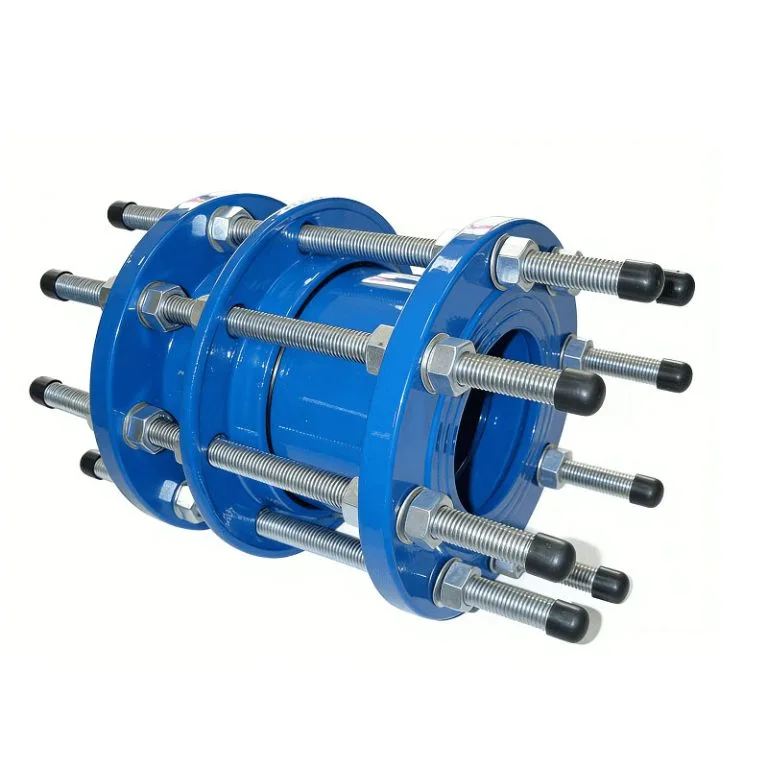
Option 1 — Upgrade to a restrained expansion joint. Install a joint with integral limit rods or tie rods that physically prevent over-extension. The rods act as a mechanical stop, capping the maximum axial travel at a safe value.
Option 2 — Field-weld limit stops. As a low-cost remedial measure, weld limit bolts or stops onto the pipe on both sides of the existing joint. This prevents further displacement and costs significantly less than a full replacement — though it is less aesthetically clean than a factory-engineered restrained joint.
Option 3 — Recalculate system movements. If pull-out occurs repeatedly, the original movement calculation is likely incorrect. DEVEL’s engineering team can review your system parameters and recommend a joint with sufficient movement capacity.
───────────────────────────────────────
- BODY AND WELD DEFECTS
Why It Happens:
Leakage from the joint body itself — rather than the flange sealing interface — indicates a manufacturing or material quality problem:
- Welding defects — porosity, slag inclusions, or pinholes in welded seams caused by rushed production or inadequate post-weld inspection
- Material porosity — low-grade cast iron flanges with microscopic internal voids that allow fluid permeation under pressure
- Casting flaws — blowholes or shrinkage cavities in cast components that went undetected before assembly
How to Fix It:
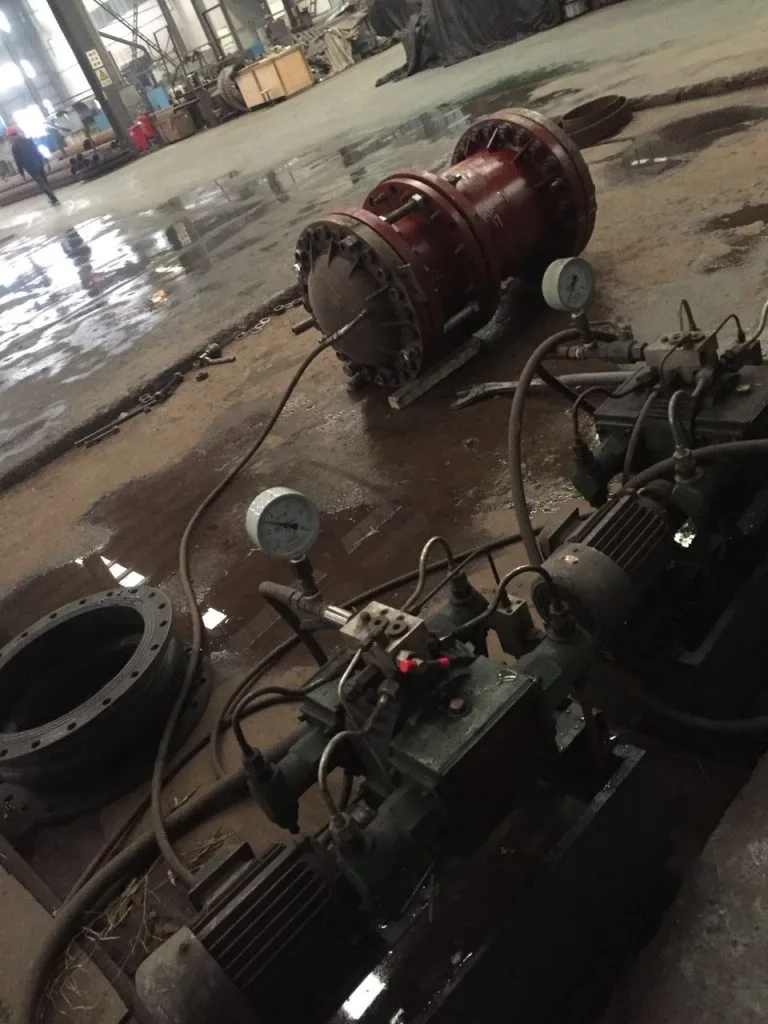
Option 1 — Weld repair. Identify the leak point through hydrostatic or dye-penetrant testing. Grind back the affected area to sound metal, then re-weld to full penetration. Post-repair, pressure-test again to confirm integrity.
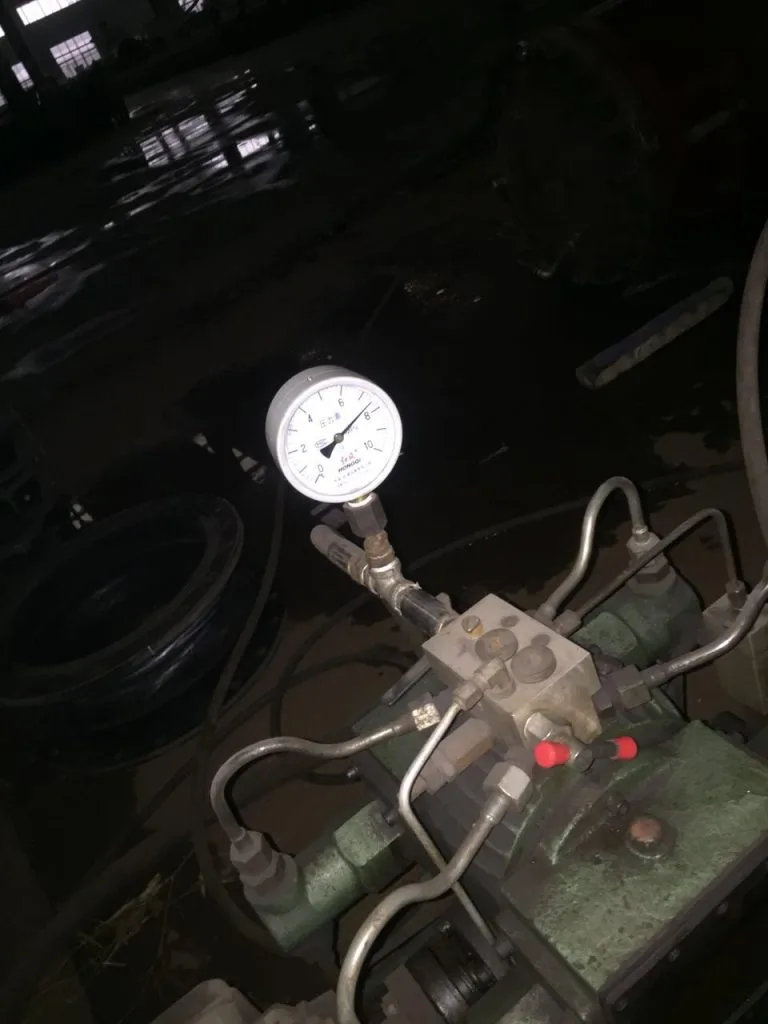
Option 2 — Replace with quality components. Specify CNC-machined flanges with a flatness tolerance of ≤0.02 mm and factory-applied anti-corrosion treatment. High-strength carbon steel (or stainless steel for corrosive service) eliminates material-porosity leakage at the source. DEVEL’s in-house QC includes hydrostatic pressure testing on every joint before shipment — defects are caught at the factory, not on your site.
───────────────────────────────────────
- INSTALLATION ERRORS
Why It Happens:
Even a perfectly manufactured expansion joint will leak if installed incorrectly. Common mistakes include:
- Flange misalignment exceeding 3 mm (1/8″), forcing the gasket to seal an uneven gap
- Incorrect bolt torque — too loose means insufficient compression; too tight can extrude the gasket or warp the flange
- Omitting washers under bolt heads, causing localized high pressure that distorts the retaining ring
- Installing the joint backwards against the flow direction arrow
How to Fix It:
- Align before bolting — use a straightedge and feeler gauge to verify flange parallelism before inserting any bolts. Never use bolts to pull misaligned pipework into position.
- Follow the torque table — tighten in stages with a calibrated torque wrench. Re-check torque 48–72 hours after commissioning.
- Always use flat washers under bolt heads to distribute load evenly.
- Confirm the flow direction arrow matches the media flow before tightening.
───────────────────────────────────────
PREVENTION: HOW TO STOP LEAKS BEFORE THEY START
The cheapest leak is the one that never happens. To eliminate the vast majority of future maintenance costs, follow these procurement and installation principles:
Procurement Checklist:
- Match pressure rating (PN10/PN16/PN25 or Class 150/300) to your system’s maximum operating pressure — not just normal conditions
- Require factory pressure test certificates with every shipment
- Verify material compatibility — gasket, body, and flange materials must withstand your media, temperature, and environment
- Choose suppliers offering long-term warranty (e.g., 3 years minimum) and lifetime technical support
Installation Checklist:
- Follow the manufacturer’s installation manual — do not apply generic pipe-fitting practices
- Pre-set the joint to the correct cold-position length to accommodate thermal expansion
- Install pipe guides and anchors per the system design — the joint cannot function without proper restraint
- Conduct a low-pressure leak test before full system commissioning
───────────────────────────────────────
WHY CHOOSE DEVEL FOR FLANGED EXPANSION JOINTS?
Henan Devel Fluid Equipment Co., Ltd. manufactures expansion joints engineered to eliminate leakage at the design stage — not as an afterthought.
- CNC-machined flanges with flatness tolerance ≤0.02 mm for perfect gasket seating
- Premium EPDM, NBR, and PTFE gasket options rated to 150°C and beyond
- Hydrostatic pressure testing on every joint with full test certificates provided
- Integrated limit rod and tie rod systems to prevent pull-out leakage
- 3-year warranty with lifetime technical support
- Custom quotes delivered within 48 hours
───────────────────────────────────────
FREQUENTLY ASKED QUESTIONS
How can I tell where the leak is actually coming from?
Dry the joint surface thoroughly, then pressurize the system and observe closely. A leak at the flange face indicates a gasket or bolt torque issue. A leak from the joint body (away from the flange) suggests a weld or material defect. Be careful — water traveling along the pipe from a different source can be misleading. Always trace the leak to its exact origin before deciding on a repair.
Can a leaking expansion joint be repaired without removing it from the pipeline?
It depends on the cause. Loose bolts can be re-tightened in service with appropriate safety precautions. A failed gasket requires depressurization and partial disassembly. A weld defect on the body can sometimes be repaired in place by a qualified welder, but the system must be fully drained and purged first.
How often should I check expansion joint bolt tightness?
DEVEL recommends checking bolt tightness 48–72 hours after initial commissioning (thermal cycling can relax gasket compression), then every 6 months as part of routine preventive maintenance. Joints in high-cycle or high-temperature service should be checked quarterly.
What service life can I expect from a properly installed expansion joint?
With correct specification, proper installation, and periodic inspection, DEVEL flanged expansion joints deliver 10–15 years of reliable service in standard applications. Gaskets may require replacement at 5–8 year intervals depending on temperature, media, and cycle frequency.
───────────────────────────────────────
STOP LEAKS BEFORE THEY START — CONTACT DEVEL TODAY
Whether you’re troubleshooting an existing leak or specifying expansion joints for a new project, DEVEL’s engineering team is ready to assist. Send us your operating parameters — pressure, temperature, media, and pipe size — and we’ll recommend the right joint with the right gasket, fully tested and guaranteed.
Email: info@develfluid.com
Website: https://develfluid.com/contact-us/
Phone: +86 18137171953
Henan Devel Fluid Equipment Co., Ltd. — Engineered to Perform, Built to Last.