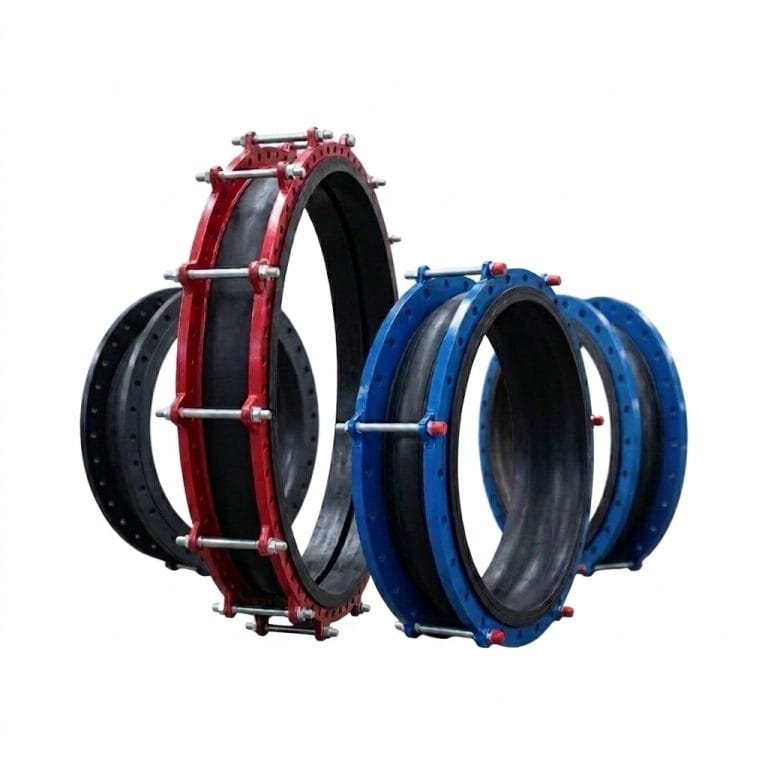
EPDM Rubber Expansion Joint Guide: Temperature, Pressure & Chemical Resistance Explained
-40~150℃
Temperature Range
PN6~PN25
Pressure Rating
pH 2~12
Chemical Resistance
10-15 yrs
Outdoor Service Life
1. EPDM vs. Natural Rubber: Why Material Chemistry Matters
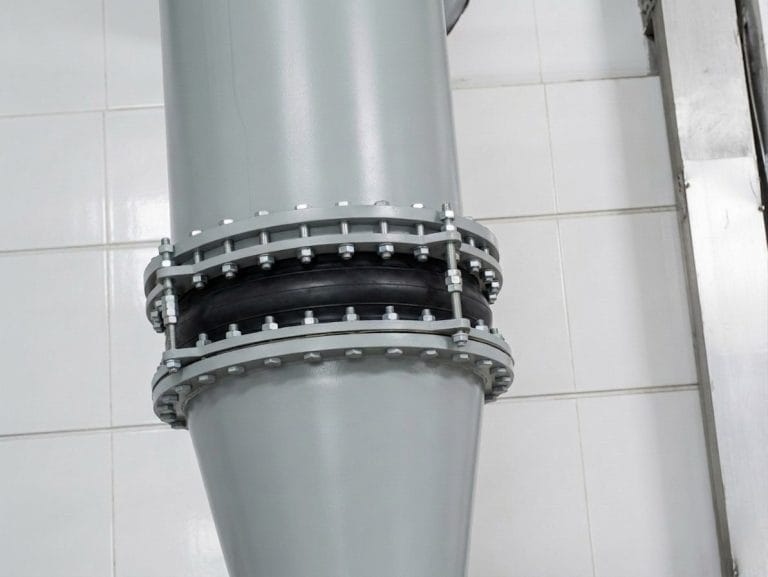
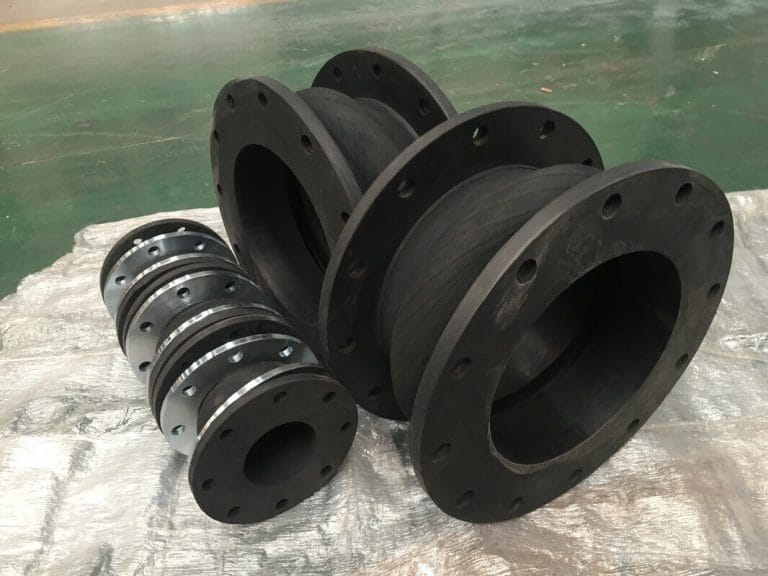
In municipal water supply, HVAC systems, wastewater treatment, industrial cooling water, and seawater pipeline engineering, rubber expansion joints (also known as flexible rubber connectors or rubber compensators) perform five critical functions: displacement compensation, vibration damping, water hammer absorption, leak-proof sealing, and installation misalignment correction.
Today, EPDM rubber expansion joints account for over 80% of the water-system market, making them the dominant choice for flexible pipe connections worldwide. The key to their dominance lies in molecular structure.
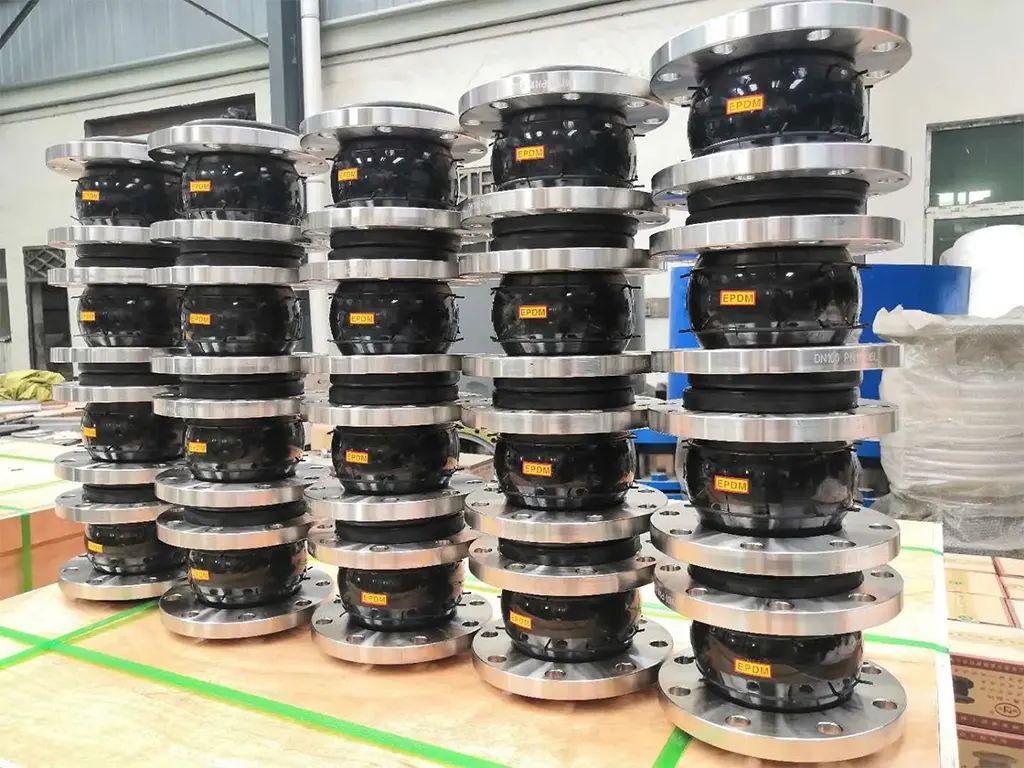
Material Comparison: EPDM vs. Natural Rubber (NR)
| Property | EPDM (Ethylene Propylene Diene Monomer) | Natural Rubber (NR) |
|---|---|---|
| Molecular Structure | Saturated backbone, no double bonds | Unsaturated backbone with double bonds |
| Ozone / UV Resistance | ★★★★★ Excellent | ★☆☆☆☆ Degrades rapidly |
| Weather Resistance (Outdoor Life) | 10-15 years | 2-4 years |
| Operating Temperature | -40℃ to 150℃ | -20℃ to 80℃ |
| Acid / Alkali Resistance | ★★★★★ pH 2-12 | ★★☆☆☆ Prone to corrosion |
| Elasticity / Tensile Strength | ★★★★☆ Good | ★★★★★ Excellent |
| Cost | Moderate | Low |
In simple terms: natural rubber offers slightly better elasticity at a lower price, but its fatal weakness is poor weather resistance. The double bonds in its molecular chain oxidize rapidly under UV and ozone exposure — outdoor natural rubber joints typically harden, crack, and deform within 2-3 years. EPDM’s saturated molecular backbone eliminates this problem at the root, delivering dramatically lower lifecycle maintenance costs.
2. Three Core Performance Parameters
2.1 Temperature Resistance (-40℃ to 150℃)
EPDM rubber expansion joints offer one of the widest operating temperature windows among elastomeric joint materials:
| Grade | Temperature Range | Typical Application |
|---|---|---|
| Standard Grade | -40℃ to 120℃ (continuous) | Cold water, wastewater, hot water, general circulating water |
| High-Temp Modified | Up to 150℃ (continuous) | Low-pressure steam lines, high-temperature hot water loops |
| Short-Term Peak | 150℃ to 160℃ (transient) | Temporary steam purging, process upsets |
| Low-Temperature Limit | Brittleness point: -50℃ | Outdoor winter service in cold / arctic regions |
⚠ High-Temperature Selection Note: As media temperature increases, the joint’s pressure-bearing capacity decreases slightly. For applications above 100℃, we recommend a 20%+ safety margin on pressure rating and confirmation that flange bolt materials are rated for the operating temperature.
2.2 Pressure Ratings (PN6 to PN25)
EPDM expansion joints use a multi-layer fabric-reinforced construction (typically nylon-66 high-tenacity industrial yarn), with pressure ratings scientifically graded by nominal diameter:
| Diameter Range | Standard Rating | Custom Max | Burst Safety Factor |
|---|---|---|---|
| DN25-DN300 (small-medium bore) | PN10 / PN16 (1.0 / 1.6 MPa) | PN25 | ≥ 3× working pressure |
| DN350-DN1400 (large bore) | PN6 / PN10 | PN16 | ≥ 3× working pressure |
- Burst pressure is 3× or more the rated working pressure — ample safety margin for hydraulic shock.
- Reinforced-ring construction is available for vacuum and negative-pressure pipeline applications.
- The flexible rubber body naturally dampens transient pressure spikes from pump starts/stops and water hammer, protecting valves, pumps, and connected equipment.
2.3 Chemical Resistance (pH 2-12)
EPDM’s saturated molecular structure provides exceptional stability against polar media, making it the ideal material for water-treatment and aqueous-service applications:
| Media Type | Compatibility | Examples |
|---|---|---|
| Dilute Acids | ✅ Long-term | Low-concentration HCl, dilute sulfuric acid |
| Dilute Alkalis | ✅ Long-term | Weak alkaline solutions, alkaline wastewater |
| Seawater / Brine / Wastewater | ✅ Long-term | Desalination, marine piping, salt-spray environments |
| Circulating Water | ✅ Long-term | Industrial cooling loops, HVAC chilled/hot water |
| Concentrated Strong Acids / Oxidizers | ❌ Not suitable | Concentrated H₂SO₄, HNO₃, strong oxidizing media |
| Oils / Organic Solvents | ❌ Not suitable | Mineral oil, gasoline, aromatic hydrocarbons |
💡 What if your media doesn’t match EPDM?
If your pipeline carries oils or concentrated chemicals, consider these alternatives:
· NBR (Nitrile) expansion joints — excellent resistance to mineral oils, fuels, and lubricants
· FKM (Viton®) expansion joints — withstand strong acids, oxidizers, and high-temperature oils
· PTFE-lined expansion joints — near-universal chemical compatibility
3. Application Scenarios & Quick-Reference Selection
Suitable Applications (EPDM Recommended)
- 🏭 Municipal water supply & drainage — potable water mains, sewer networks
- 🌡️ HVAC systems — chilled water, hot water, cooling tower loops
- 💧 Wastewater treatment — municipal and industrial effluent piping
- 🏗️ Industrial cooling water — power plants, chemical plant circulating water
- 🌊 Seawater / brine pipelines — desalination plants, marine piping, shipboard systems
- 🔥 Low-pressure steam / hot water — up to 150℃ hot water and low-pressure steam lines
- ☀️ Outdoor exposed piping — UV-resistant, weather-proof, no protective covering needed
Unsuitable Applications (Select Alternative Material)
- ❌ Oil / fuel pipelines → switch to NBR (Nitrile) rubber expansion joints
- ❌ Concentrated acids / strong oxidizers → switch to FKM (Viton®) or PTFE-lined joints
- ❌ Continuous service above 150℃ → switch to metallic expansion joints (stainless steel bellows)
- ❌ Aromatic hydrocarbon solvents → switch to FKM expansion joints
EPDM Expansion Joint Selection Quick-Reference
| Operating Condition | Recommended Configuration | Notes |
|---|---|---|
| Ambient temp, standard pressure | Standard grade + PN10/PN16 | Most common, best value |
| Hot water > 100℃ | High-temp grade + 20% pressure margin | Verify flange bolt temperature rating |
| Large bore ≥ DN350, low pressure | PN6/PN10 + reinforced rings | Avoid over-specifying on large diameters |
| Vacuum / negative pressure | Reinforced ring construction | Prevents rubber body collapse |
| Seawater / salt-spray environment | EPDM standard + galvanized or 316 SS flanges | Flange material must match corrosion requirements |
| Strong acids / oils / solvents | EPDM NOT suitable — use NBR or FKM | See chemical compatibility table above |
4. Why EPDM Expansion Joints Are the Industry Standard
- Best overall value — 3-5× longer service life than natural rubber at a fraction of FKM or silicone cost (50%+ cost savings vs. specialty elastomers). Stable pricing, reliable supply chain.
- Excellent installation flexibility — effectively compensates for thermal expansion, installation misalignment, and foundation settlement stresses, preventing pipe cracking and equipment damage.
- Low lifecycle maintenance — long-term aging resistance, corrosion resistance, and durability mean fewer inspections, fewer replacements, and lower total cost of ownership.
- Broad industry acceptance — compliant with municipal, HVAC, and water treatment design codes. The standard preferred specification for engineering procurement worldwide.
- Vibration and noise damping built-in — inherent rubber damping properties absorb pump and compressor vibration, attenuate water hammer, and reduce pipeline operating noise.
Frequently Asked Questions
Q1: What’s the difference between EPDM and natural rubber expansion joints?
The key difference is molecular structure. EPDM has a saturated backbone with no double bonds, while natural rubber has unsaturated double bonds that are vulnerable to ozone and UV attack. This means EPDM joints last 10-15 years outdoors vs. 2-4 years for natural rubber. EPDM also offers a wider temperature range (-40℃ to 150℃ vs. -20℃ to 80℃) and superior chemical resistance.
Q2: What temperature can EPDM expansion joints handle?
Standard EPDM joints operate continuously from -40℃ to 120℃. High-temperature modified grades can handle continuous service at 150℃. Short-term spikes up to 150-160℃ are tolerated. At the low end, the brittleness point is -50℃, making EPDM suitable for outdoor winter service in cold regions without risk of cracking.
Q3: How do I choose the right pressure rating?
For DN25-DN300 (small to medium bore), standard ratings are PN10 (1.0 MPa) or PN16 (1.6 MPa), with PN25 available as a custom option. For DN350 and above (large bore), PN6 or PN10 is typical. Rule of thumb: the pipeline’s maximum operating pressure should not exceed 70% of the expansion joint’s rated pressure.
Q4: Can EPDM expansion joints be used in seawater applications?
Yes. EPDM has excellent resistance to salt water and hydrolysis, making it ideal for desalination plants, marine piping, and salt-spray environments. However, flange material must also be corrosion-resistant — use galvanized steel or 316 stainless steel flanges for seawater service.
Q5: What is the service life of an EPDM expansion joint?
Under normal outdoor operating conditions (non-extreme corrosion, non-sustained high temperature), EPDM rubber expansion joints have a design service life of 10-15 years — approximately 3 to 5 times longer than natural rubber equivalents. Regular inspection of flange bolt torque and rubber body surface condition helps extend actual service life even further.
Q6: What are the installation best practices for rubber expansion joints?
- Keep sharp tools and metal edges away from the rubber body during handling and installation.
- Tighten flange bolts in a star/cross pattern, gradually and evenly — never fully tighten one side first.
- At pump suction and discharge connections, install the joint parallel to the pump axis to prevent air accumulation.
- The pipeline must have independent supports — the expansion joint compensates for movement only and must not bear the weight of the pipe.
- Keep away from welding sparks, open flames, and direct heat sources.
Need an EPDM Expansion Joint Selection Quote?
Send us your pipe diameter, media type, temperature, and pressure requirements — we’ll match you with the optimal rubber expansion joint within 24 hours.
📧 Email: info@develfluid.com | 📱 Request Quote: Online Inquiry | 📋 View All Rubber Expansion Joints