Non-Metallic Expansion Joints: Installation Best Practices & Usage Guide
[Henan, China] — Non-metallic expansion joints (also known as fabric expansion joints or non-metallic compensators) play an indispensable role in modern industrial piping systems. From thermal power plants to steel mills, from chemical processing to HVAC networks, these flexible connectors absorb thermal expansion, isolate vibration, and compensate for misalignment — all while handling extreme temperatures and corrosive flue gases. Yet even the best-engineered expansion joint will underperform or fail prematurely if installed incorrectly. In this article, Henan Devel Fluid (DEVEL) shares field-tested guidance on the proper use and installation of non-metallic expansion joints to help your team maximize service life and system reliability.
What Is a Non-Metallic Expansion Joint?
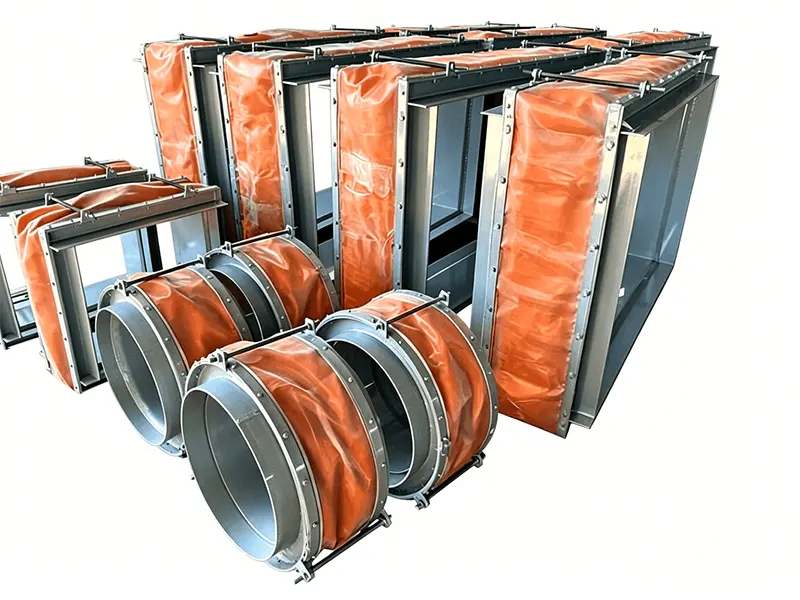
A non-metallic expansion joint is a flexible connector composed of multiple layers of high-temperature-resistant fabric, insulating materials, and a metal frame. Unlike all-metal bellows, the core flexible element — often referred to as the fabric belt — is constructed from materials such as fiberglass, PTFE, silica, or aramid fibers, depending on the operating environment.
These joints are specifically designed to handle large multi-directional displacements in ducting and piping systems that carry hot gases. They compensate for axial, lateral, and angular movements simultaneously — something rigid metal connectors cannot achieve without generating excessive structural stress.
Common applications include:
- Flue gas desulfurization (FGD) systems in coal-fired power plants
- Hot blast stove ducting in steel mills
- Cement kiln exhaust lines
- Petrochemical process gas piping
- District heating and CHP (combined heat and power) networks
Temperature Range & Material Selection
One of the defining characteristics of non-metallic expansion joints is their extraordinary temperature tolerance. Depending on the fabric belt construction, DEVEL’s non-metallic expansion joints reliably operate within a range of -196°C to 1,000°C (-320°F to 1,832°F).
Selecting the right material combination is critical:
| Temperature Range | Recommended Fabric Material | Typical Application |
|---|---|---|
| Up to 250°C (482°F) | Fiberglass fabric with PTFE coating | Low-temperature flue gas, ventilation ducts |
| 250°C – 450°C (482°F – 842°F) | Silicone-coated fiberglass | Medium-temperature process gas, boiler outlets |
| 450°C – 800°C (842°F – 1,472°F) | Silica fabric with insulation layers | Hot blast ducts, gas turbine exhaust |
| 800°C – 1,000°C (1,472°F – 1,832°F) | Ceramic fiber fabric with multi-layer insulation | Steel mill hot stoves, cement kiln preheaters |
Key takeaway: Never assume one material fits all. When the operating temperature approaches the upper limit of a given fabric, additional insulation layers or external heat shields should be integrated into the joint design. DEVEL’s engineering team provides material compatibility analysis as part of every quotation — contact us with your operating parameters for a tailored recommendation.
Understanding Fatigue Life and Operating Cycles
A commonly overlooked factor in non-metallic expansion joint performance is fatigue life. Every thermal cycle — from ambient temperature to operating temperature and back — counts as one compensation cycle. The flexible fabric element is designed for a finite number of these cycles before material degradation begins.
In seasonal heating applications, the joint may only see a handful of full cycles per year. However, in processes with frequent start-stop operations, maintenance shutdowns, or large temperature swings, the accumulated cycle count can accelerate rapidly. This is particularly relevant for:
- Peak-load power plants that cycle on and off daily
- Batch chemical processes with recurring temperature ramps
- Steel mill equipment subject to intermittent operation
How to Extend Fatigue Life
- Minimize unnecessary thermal cycling. Avoid shutting down and restarting equipment unless operationally necessary.
- Control ramp rates. Gradual temperature changes reduce thermal shock stress on the fabric layers.
- Specify the correct cycle rating upfront. When ordering, clearly communicate your expected annual cycle count so DEVEL engineers can select the appropriate fabric belt construction and reinforcement.
- Schedule periodic inspections. Visual checks of the fabric belt surface every 3–6 months can catch early signs of wear before failure occurs.
Pre-Installation Checklist: 7 Steps Before You Mount
Installation quality directly determines service life. Rushing through preparation is the single most common cause of premature non-metallic expansion joint failure. Below is DEVEL’s recommended 7-point pre-installation checklist:
| # | Check Item | Why It Matters |
|---|---|---|
| 1 | Construction drawings reviewed and approved | Ensures the expansion joint model, dimensions, and orientation match the actual installation position. Cross-check flange standards (ASME/DIN/JIS) before proceeding. |
| 2 | All components inspected and passed | Verify that the expansion joint assembly, gaskets, and fasteners are undamaged from shipping. Any dented flanges, torn fabric, or missing hardware must be flagged before lifting. |
| 3 | Supporting steel structure installed and accepted | The expansion joint must never be used to support the weight of adjacent ducting. Confirm that fixed anchors, guides, and supports are fully in place per the system design. |
| 4 | Access roads clear for material delivery | Non-metallic expansion joints — especially large-diameter units — can be bulky. Confirm crane access and material staging areas before the installation crew arrives. |
| 5 | Personnel and tools on site | Ensure the installation team has torque wrenches calibrated to the specified bolt tension, lifting equipment rated for the joint weight, and alignment tools (laser or dial indicator). |
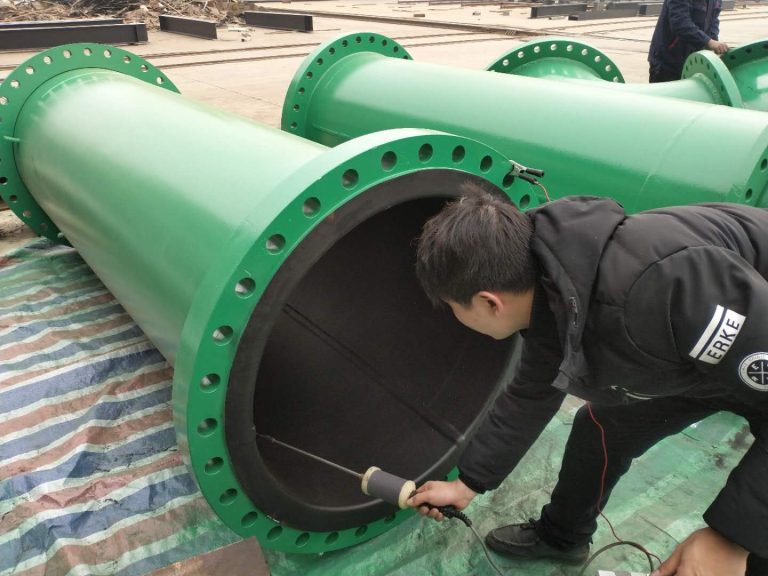
| 6 | Incoming finished product inspection passed | Perform a final visual and dimensional check of the expansion joint before lifting. Verify the face-to-face length, flange drilling, and any pre-compression or pre-stretching settings marked on the unit. |
| 7 | Adjacent equipment shut down and locked out | Safety first — confirm LOTO (lockout-tagout) procedures are complete on all connected systems. Residual heat, pressure, or hazardous gas must be fully purged before breaking into the line. |
Installation Best Practices: Getting It Right
1. Alignment Before Bolting
Misalignment is the #1 killer of non-metallic expansion joints. The mating flanges must be parallel and coaxial before any bolts are inserted. Use a feeler gauge to check flange face parallelism — a deviation greater than 1.5 mm across the diameter warrants correction. Never use the expansion joint itself to “pull” misaligned ducting into position. The joint should fit naturally between the flanges; forcing it introduces pre-stress that will shorten service life.
2. Correct Bolt Torque Sequence
Tighten bolts in a star-pattern (cross-tightening) sequence, not sequentially around the flange. This ensures even compression of the gasket and prevents localized over-tightening that can deform the metal frame. Use a calibrated torque wrench and follow the torque values specified in DEVEL’s installation manual for your joint size and pressure class.
3. Respect the Flow Direction Arrow
Most non-metallic expansion joints include an internal flow liner (baffle) designed to protect the fabric belt from direct impingement of abrasive particles and high-velocity gas. The liner is directional — look for the flow arrow marked on the metal frame. Installing the joint backwards will expose the fabric to erosion and can cause rapid failure.
4. Protect the Fabric Belt During Welding
If any on-site welding is required near the expansion joint, the fabric belt must be shielded from weld spatter, slag, and radiant heat. Even a single hot particle landing on the fabric can burn through a layer and compromise the joint’s sealing integrity. Use fire-resistant blankets and keep welding activities at a safe distance whenever possible.
5. Post-Installation Pressure Test
After installation, conduct a low-pressure leak test (typically at 1.1× design pressure or per project specification) before commissioning the system at full operating temperature. This catches gasket seating issues and bolt tension problems before they become safety incidents.
Common Mistakes to Avoid
❌ Mistake 1: Using the expansion joint as a structural support. The joint is a flexible element — it cannot bear the weight of ducting, valves, or personnel.
✅ Fix: Ensure independent supports are installed on both sides of the joint.
❌ Mistake 2: Over-compressing or over-extending the joint during installation. Exceeding the design movement range pre-consumes the joint’s compensation capacity.
✅ Fix: Install the joint at its neutral (as-manufactured) length unless the drawing specifies a preset offset.
❌ Mistake 3: Ignoring thermal expansion of the ducting itself. The connected ductwork also expands and contracts — the joint must accommodate this movement without bottoming out.
✅ Fix: Calculate the total expected displacement at the joint location and verify it falls within the joint’s rated movement envelope.
❌ Mistake 4: Reusing old gaskets. Gaskets compress and take a permanent set — they will not seal properly a second time.
✅ Fix: Always install new gaskets when replacing or reinstalling a non-metallic expansion joint.
❌ Mistake 5: Skipping the post-installation inspection. A quick visual check before startup can catch loose bolts, twisted fabric, or debris inside the joint.
✅ Fix: Walk through the full checklist one final time before signing off.
Why Choose DEVEL for Your Non-Metallic Expansion Joint Needs?
Henan Devel Fluid Equipment Co., Ltd. is a factory-direct manufacturer with over a decade of experience supplying non-metallic expansion joints to projects across 30+ countries. Our fabric compensators are custom-engineered to your exact specifications — not pulled from off-the-shelf stock — because we understand that every installation has unique temperature, pressure, media, and movement requirements.
- Global standards compliance: ASME, DIN, JIS, and GB — your drawings, our manufacturing.
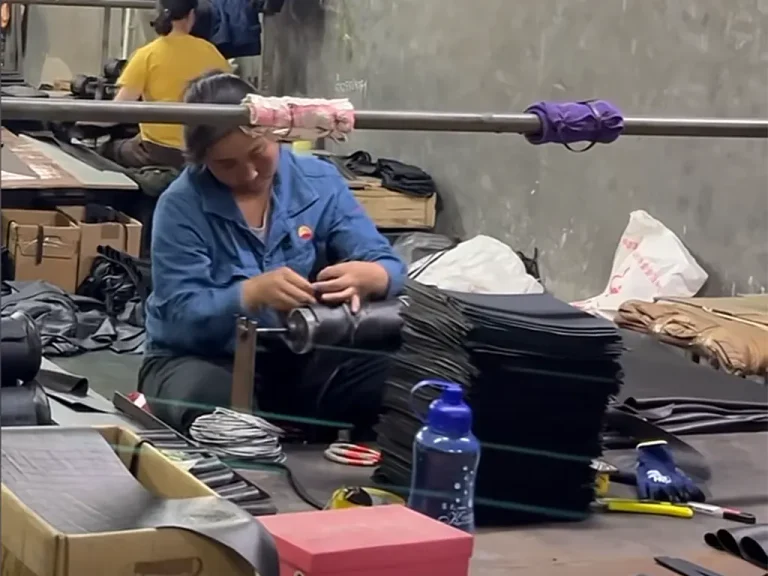
- Full in-house QC: From incoming raw fabric inspection to final dimensional verification, every joint is checked at each production stage.
- Custom engineering support: Our engineers work directly with your project team to select the optimal fabric belt construction, frame design, and insulation configuration.
- Competitive factory pricing: Direct from our Henan facility — no middlemen, no markups.
- Fast turnaround: Standard-spec quotations within 48 hours; urgent project timelines accommodated.
Frequently Asked Questions
What is the difference between a metallic and non-metallic expansion joint?
Metallic expansion joints (bellows) use formed metal convolutions — typically stainless steel or Inconel — to absorb movement. They excel in high-pressure, high-vacuum, and extreme-temperature applications. Non-metallic expansion joints use flexible fabric belts and are superior for large lateral offsets, multi-directional movement, low-noise operation, and corrosive flue gas environments at a lower cost.
How long does a non-metallic expansion joint last?
Service life depends on operating temperature, cycle frequency, media composition, and installation quality. A properly specified and installed DEVEL non-metallic expansion joint typically delivers 5–10 years of reliable service in standard flue gas applications. Units in more aggressive environments may require fabric belt replacement at shorter intervals — this is normal maintenance, not a product failure.
Can non-metallic expansion joints be repaired?
In most cases, the fabric belt is replaceable without removing the entire metal frame from the ducting. DEVEL supplies replacement fabric belts matched to your original joint dimensions. For emergency repairs, temporary patch kits are available — contact our service team for guidance.
What flange standards do you support?
DEVEL manufactures to ANSI/ASME B16.5, EN 1092 (DIN), JIS B2220, and GB/T 9119 flange standards. Non-standard drilling patterns and custom frame geometries are also available on request.
Ready to Specify Your Non-Metallic Expansion Joint?
Whether you’re designing a new system or replacing an existing unit, DEVEL’s engineering team is ready to support your project. Send us your operating parameters — temperature, pressure, media, movement requirements, and flange standard — and we’ll return a customized quotation within 48 hours.
Contact DEVEL today:
- 📧 Email: info@develfluid.com
- 🌐 Website: https://develfluid.com/contact-us/
- 📞 Phone: +86-18137171953
Henan Devel Fluid Equipment Co., Ltd. — Your Partner in Industrial Fluid Compensation Solutions.