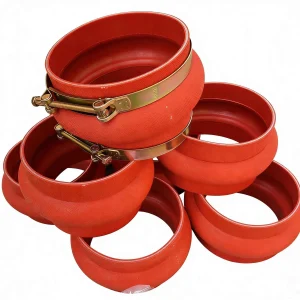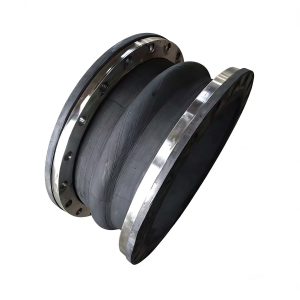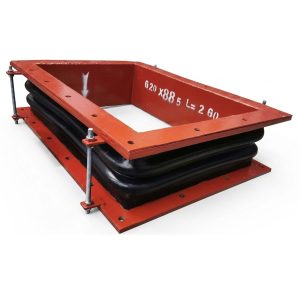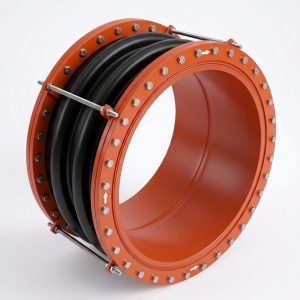
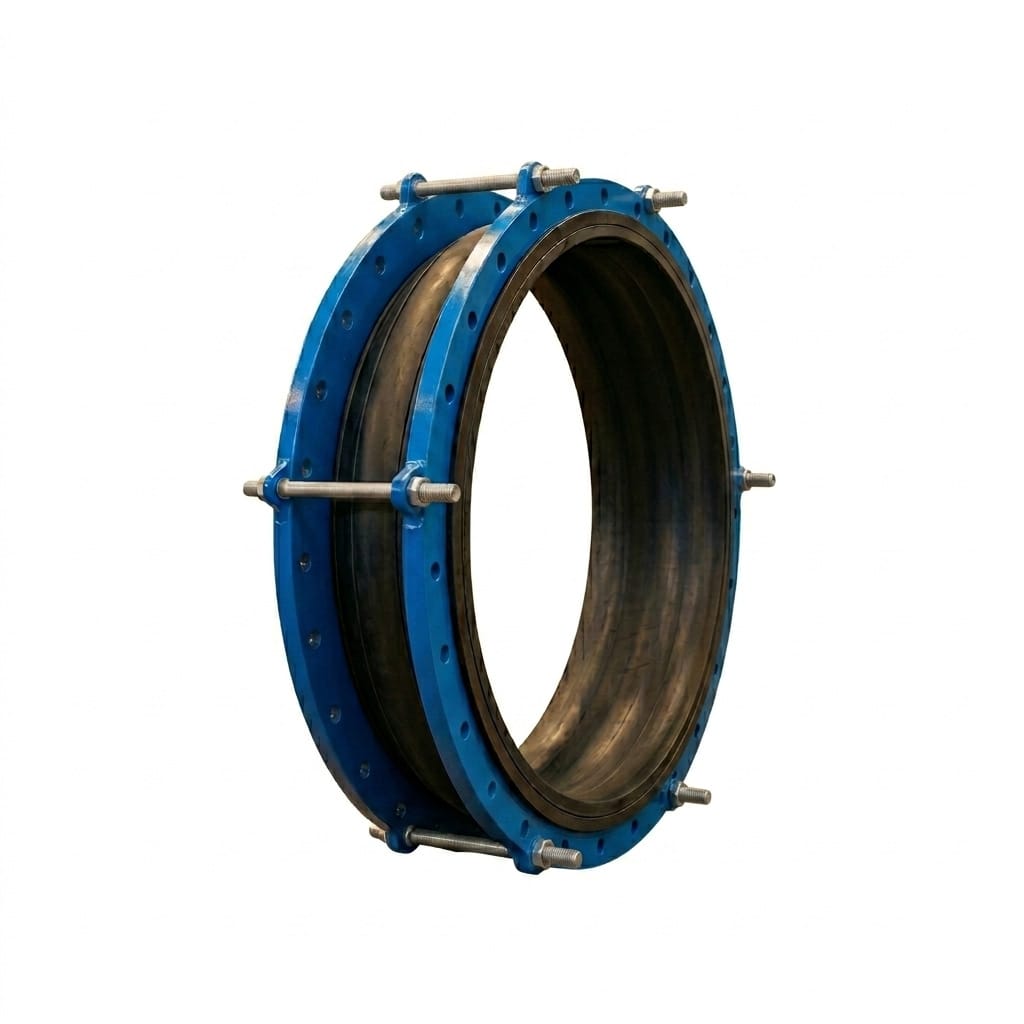
Single Sphere Rubber Expansion Joint — Rubber Flexible Joint
DEVEL single sphere rubber expansion joints are high-performance rubber flexible joints used as flexible joint pipe connectors and pipe expansion joints. Designed to reduce vibration and absorb thermal movement in industrial piping, these rubber expansion joints are available in DN32–DN5000 with EPDM, NBR, and Neoprene materials. ANSI, DIN, JIS, and BS flanges are supported.
Single Sphere Rubber Expansion Joint — Flexible Joint Pipe for Industrial Piping
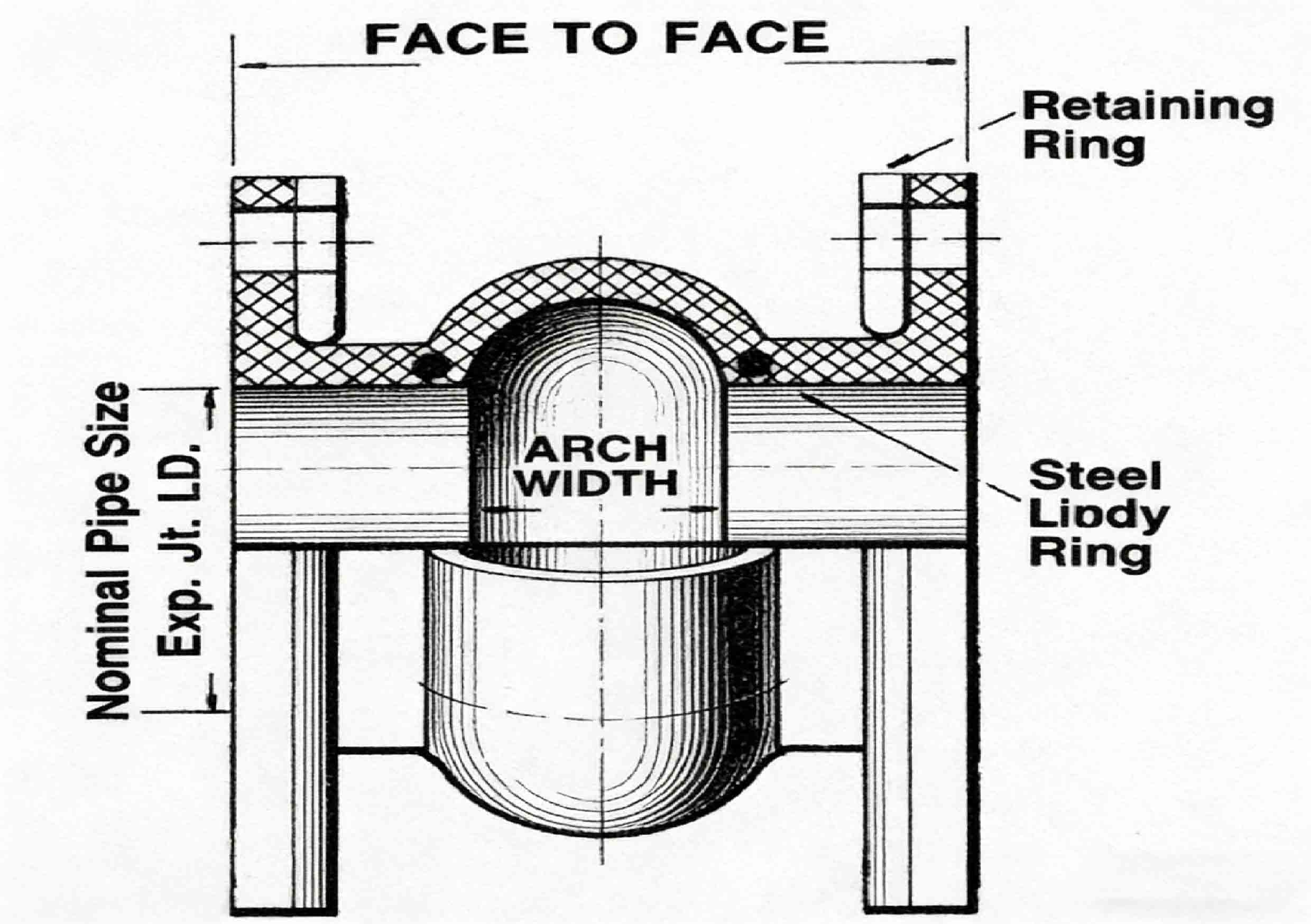
Key Features of Single Sphere Rubber Expansion Joint
- Reduce Pipeline Vibration and Absorb Displacement
The single sphere geometry leverages the elastomer’s inherent damping coefficient to absorb axial movement up to 60 mm (size-dependent). It effectively isolates mechanical vibrations from pumps, compressors, and fluid turbulence — preventing fatigue cracking, flange loosening, and premature wear on connected equipment such as valves, heat exchangers, and instrumentation. - Suppress Sound Transmission and Eliminate Noise
Rubber’s high internal damping factor breaks the acoustic transmission path through rigid metal pipe walls. DEVEL rubber expansion joints typically achieve 15–25 dB(A) reduction in structure-borne noise, helping industrial and commercial facilities comply with occupational noise exposure limits while creating a safer, more comfortable working environment. - Compensate for Lateral, Torsional, and Angular Misalignment
Field installations rarely achieve perfect pipe alignment. The flexible arch accommodates lateral offsets up to 35 mm, torsional rotation, and angular deflection up to 25° (refer to the dimensions table for size-specific ratings). This built-in flexibility eliminates the need for costly pipe re-routing, precision welding, or custom offset spool pieces during installation and settlement. - Compensate for Thermal Expansion and Contraction
Temperature fluctuations in fluid media cause metal pipes to expand and contract, generating axial thrust loads at anchors and flanges. The rubber joint’s axial compression and extension capabilities (typically ±15 mm to ±30 mm per the sizing chart) act as a built-in expansion compensation element — protecting flanges, gaskets, pipe supports, and anchor blocks from cyclic thermal stress without requiring separate metallic expansion loops or bellows. - Most Economical Flexible Connector for Fluid Piping Systems
Compared to stainless steel bellows, braided metal hose assemblies, or expansion loops, single sphere rubber joints deliver the lowest installed cost per unit of movement accommodation. Zero routine maintenance, inherent corrosion resistance (no coating required), a 3:1 burst-to-working-pressure safety factor, and a 15–20 year service life combine to produce a compelling total lifecycle cost advantage across water, wastewater, HVAC, marine, and light chemical applications.
Rubber Expansion Joint Technical Parameters & Material Specifications
| Technical Property | Specification |
|---|---|
| Product Name | Single Sphere Rubber Expansion Joint |
| Bore Size Range | DN32mm – DN5000mm (1.25″ to 200″) |
| Working Pressure | PN10 / PN16 / PN25 | Class 150 / Class 300 |
| Standard Compliance | GB, ASME/ANSI B16.5, DIN, BS, EN1092, JIS |
| Elastomer Material | EPDM, NBR (Nitrile), Natural Rubber, Neoprene, SBR |
| Flange Material | Carbon Steel Q235 (Galvanized/Coated), Stainless Steel 304 / 316 / 316L |
| Applicable Media | Water, Sea Water, Sewage, Mild Acids, Alkalis, Oils, Compressed Air |
| Operating Temperature | -15°C to +115°C (depending on lining selection) |
| Safety Factor | ≥ 3:1 (Burst Pressure vs. Working Pressure) |
Rubber Flexible Joint Material Selection Guide
Selecting the right elastomer for your flexible joint pipe is critical to service life and performance. Below is a quick reference for common applications:
| Material | Temperature | Best For | Avoid For |
|---|---|---|---|
| EPDM | -20°C ~ +120°C | Hot water, steam, cooling water, ozone exposure, outdoor weathering | Oils, petroleum-based fluids, solvents |
| NBR (Nitrile) | -15°C ~ +100°C | Oils, fuels, greases, hydraulic fluids, petroleum products | Ozone, strong oxidizers, outdoor UV exposure |
| Neoprene (CR) | -15°C ~ +110°C | Seawater, refrigeration, mild chemicals, outdoor use, weather resistance | Strong acids, ketones, esters, chlorinated solvents |
| Natural Rubber | -20°C ~ +70°C | Water, slurry, abrasive media, general purpose, high elasticity | Oils, UV, ozone, high temperature, chemicals |
Not sure which material fits your application? Our engineers can recommend the right rubber flexible joint based on your media, temperature, and pressure requirements. Contact us for technical support →
Flexible Joint Pipe Dimensions & Movement Capabilities
| Nominal Diameter | Install Length | Axial Movement (mm) | Lateral Movement | Angular Movement | ||
|---|---|---|---|---|---|---|
| mm (DN) | inch | Face-to-Face (mm) | Extension | Compression | (mm) | (α1 + α2) (°) |
| 32 | 1.25 | 90 | 6 | 10 | — | — |
| 40 | 1.5 | 95 | 6 | 10 | — | — |
| 50 | 2 | 105 | 6 | 10 | 10 | 25 |
| 65 | 2.5 | 115 | 8 | 15 | 12 | 25 |
| 80 | 3 | 135 | 8 | 20 | 12 | 25 |
| 100 | 4 | 150 | 12 | 20 | 16 | 15 |
| 125 | 5 | 165 | 12 | 20 | 16 | 15 |
| 150 | 6 | 180 | 12 | 20 | 16 | 15 |
| 200 | 8 | 210 | 30 | 30 | 16 | 15 |
| 250 | 10 | 230 | 30 | 30 | 25 | 8 |
| 300 | 12 | 245 | 30 | 30 | 25 | 8 |
| 350 | 14 | 255 | 30 | 30 | 25 | 8 |
| 400 | 16 | 255 | 30 | 30 | 25 | 8 |
| 450 | 18 | 255 | 30 | 30 | 25 | 8 |
| 500 | 20 | 255 | 30 | 30 | 25 | 8 |
| 600 | 24 | 260 | 40 | 40 | 25 | 8 |
| 700 | 28 | 260 | 40 | 40 | 30 | 3 |
| 750 | 30 | 260 | 40 | 40 | 30 | 3 |
| 800 | 32 | 260 | 40 | 40 | 30 | 3 |
| 900 | 36 | 260 | 40 | 40 | 30 | 3 |
| 1000 | 40 | 260 | 40 | 40 | 30 | 3 |
| 1100 | 44 | 300 | 40 | 40 | 30 | 3 |
| 1200 | 48 | 300 | 50 | 50 | 30 | 3 |
| 1300 | 52 | 300 | 50 | 50 | 35 | 2 |
| 1400 | 56 | 350 | 50 | 50 | 35 | 2 |
| 1500 | 60 | 350 | 50 | 50 | 35 | 2 |
| 1600 | 64 | 350 | 50 | 50 | 35 | 2 |
| 1800 | 72 | 400 | 50 | 50 | 35 | 2 |
| 2000 | 80 | 400 | 60 | 60 | 35 | 2 |
| 2200 | 88 | 400 | 60 | 60 | 35 | 2 |
| 2400 | 96 | 450 | 60 | 60 | 35 | 2 |
| 2600 | 104 | |||||
Pipe Expansion Joint Applications Across Industries
- HVAC Systems: Chilled water, condenser water, and hot water distribution loops.
- Water & Wastewater: Pump stations, treatment plants, and raw water intake/discharge lines.
- Marine & Offshore: Ballast systems, cooling water circuits, and desalination plants.
- Chemical Processing: Low-concentration acid/alkali transfer lines with compatible elastomer selection.
- Power Generation: Condenser cooling, auxiliary water loops, and FGD systems.
Frequently Asked Questions About Rubber Expansion Joints
What is a single sphere rubber expansion joint?
A single sphere rubber expansion joint is a flexible connector installed between two pipe flanges to absorb vibration, compensate for thermal expansion, and accommodate minor misalignment. The “single sphere” refers to its one-arch design, which provides axial, lateral, and angular movement capability in a compact face-to-face length — making it the most widely used type of pipe expansion joint in industrial piping systems.
What is the difference between a rubber expansion joint and a flexible joint pipe?
A rubber expansion joint and a flexible joint pipe serve the same core function — providing flexibility in rigid piping systems. “Rubber expansion joint” is the technical term used in engineering specifications and procurement documents, while “flexible joint pipe” or “rubber flexible joint” is more common in installation, maintenance, and field service contexts. At DEVEL, both terms refer to the same high-performance product line, manufactured to the same rigorous standards.
Can rubber flexible joints handle high pressure?
Yes. DEVEL rubber expansion joints are rated for PN10, PN16, and PN25 working pressures, with a 3:1 safety factor — meaning burst pressure is at least 300% of the rated working pressure. For example, a PN16 rated single sphere rubber expansion joint has a burst pressure of ≥48 bar. For high-pressure applications, we also offer reinforced multi-layer construction with integrated retaining rings.
What flange standards are available for your pipe expansion joints?
We offer flange drilling to ANSI B16.5 (Class 150 and Class 300), DIN, BS, JIS, and EN1092 standards. Custom drilling patterns are available on request for OEM projects. All flanges are available in carbon steel (galvanized or epoxy coated) and stainless steel 304/316/316L.
How do I install a flexible joint pipe correctly?
Install the rubber expansion joint between two fixed pipe supports (anchors), ensuring the mating flanges are aligned within the joint’s rated angular tolerance — refer to the dimensions table above for size-specific values. Do not use the expansion joint to correct major pipe misalignment; it is designed for dynamic movement absorption, not permanent offset correction. Control rods are recommended for applications where system pressure creates high axial thrust loads.
Flexible Connector
Single Sphere
Vibration Absorption
Pipe Expansion Joint
Flanged Connector
EPDM Rubber Joint
NBR Rubber Joint
Industrial Piping
HVAC
Water Treatment
Marine
Thermal Expansion
Noise Reduction
DN32-DN5000
Looking for a reliable rubber flexible joint supplier?
Contact DEVEL for factory-direct pricing on single sphere rubber expansion joints DN32–DN5000. Custom sizes, materials, and flange standards available. Fast quote, global delivery.